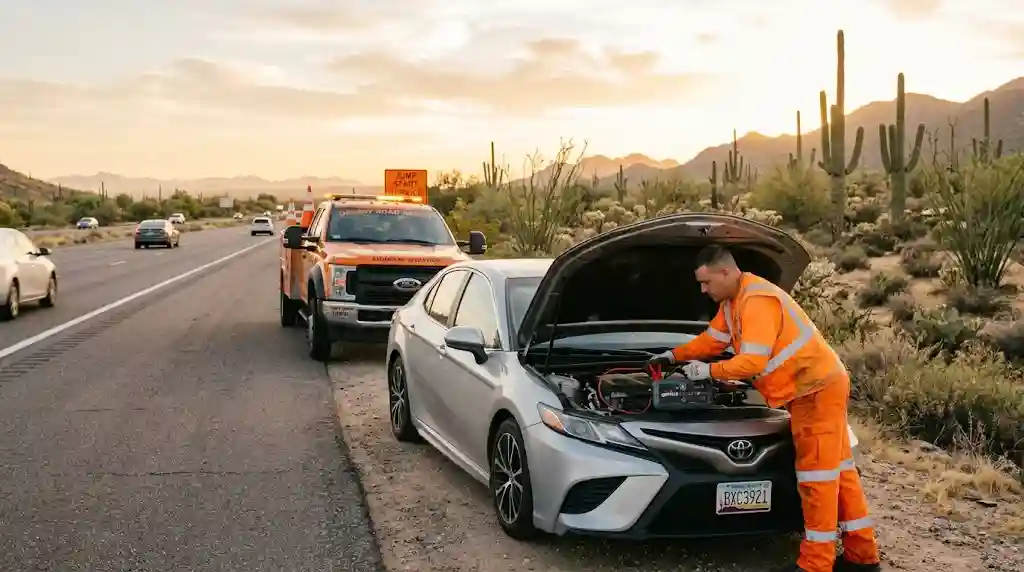
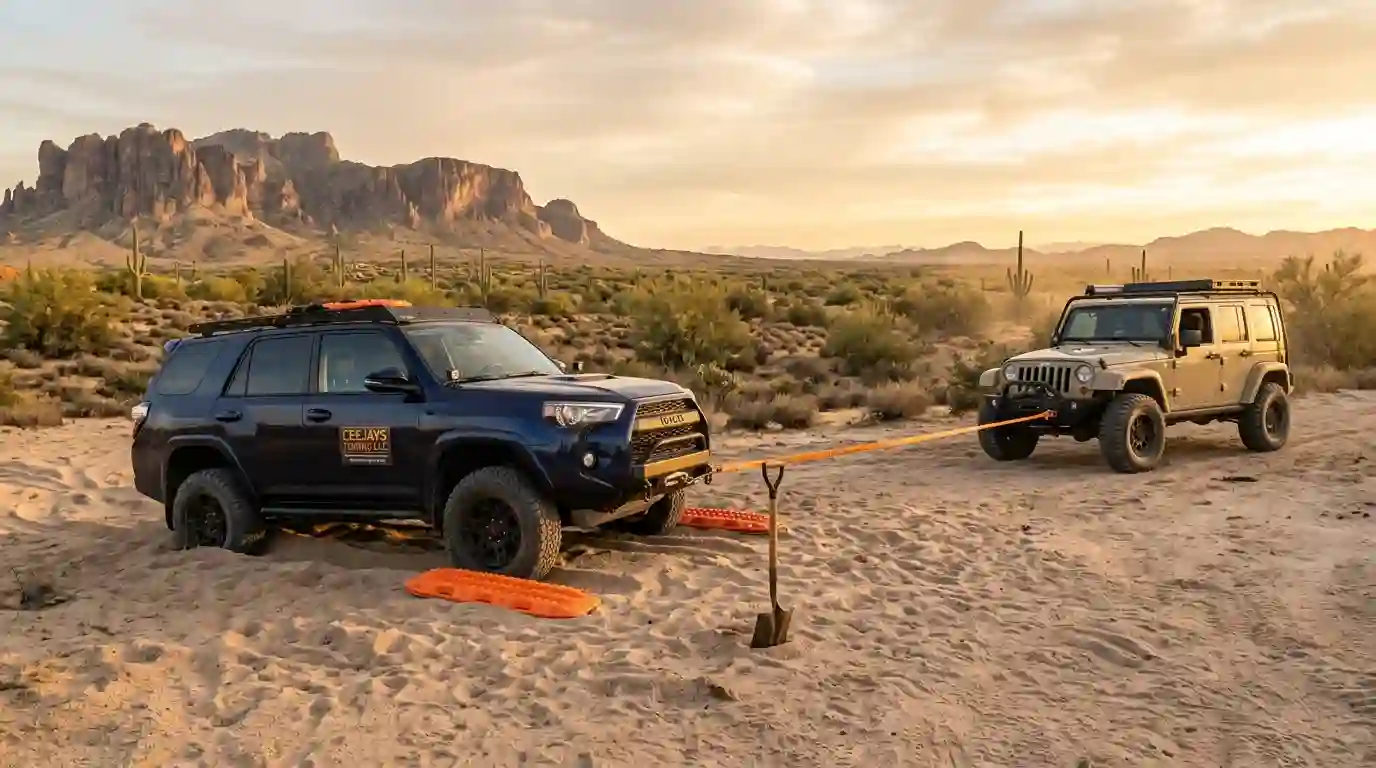
Getting stuck on a trail happens to almost every driver eventually. Knowing when to use recovery accessories off-road 4×4 keeps small mishaps from turning into dangerous situations.
You do not always need heavy machinery when your vehicle loses traction. Matching the right tool to your specific trail situation saves time, protects your rig, and prevents unnecessary gear damage.
What are the Main Types of 4×4 Recovery Equipment?
4×4 recovery equipment falls into four primary categories: traction gear, kinetic recovery tools, static winching systems, and mechanical lifting tools. Each type serves a distinct purpose depending on whether you face loose surface spinning, dynamic momentum pulls, heavy ground suction, or mechanical trail repairs.
Understanding these categories helps you select the exact tool needed without putting unnecessary stress on your vehicle or hardware.
- Traction Gear: Includes recovery boards, shovels, and tire deflators designed for low-stress self-recovery.
- Kinetic Gear: Consists of kinetic recovery ropes and snatch straps that stretch to store energy for dynamic vehicle-to-vehicle pulls.
- Static Gear: Covers electric winches, tree saver straps, winch extension lines, and snatch blocks used for controlled, high-force extractions.
- Connecting Hardware: Includes rated steel bow shackles, synthetic soft shackles, and receiver hitch mounts to join gear safely.
- Lifting Tools: Involves hi-lift jacks, bottle jacks, and base plates to raise stuck tires or perform trailside tire changes.
When to Use Recovery Boards
Use recovery boards when your wheels spin in sand, snow, or soft mud and the vehicle hasn’t sunk past the axles. Boards give the tires a firm surface to grip. They work best for self-recovery, since you don’t need a second vehicle or an anchor point.
Boards, also sold as traction boards or sand ladders, work like a staircase for stuck tires. Dig a ramp first. Wedge each board snug against the tread, then drive forward slowly and steadily. Fast wheel spin just fires the board out behind you.
Tie a lanyard to each one so soft sand doesn’t swallow them. Boards struggle in deep, sticky mud, where suction grips the chassis. Those off-road recovery tools can’t beat that. A winch can.
Quick Guide: Match the Stuck Situation to the Tool
| Situation | Start with | Step up to |
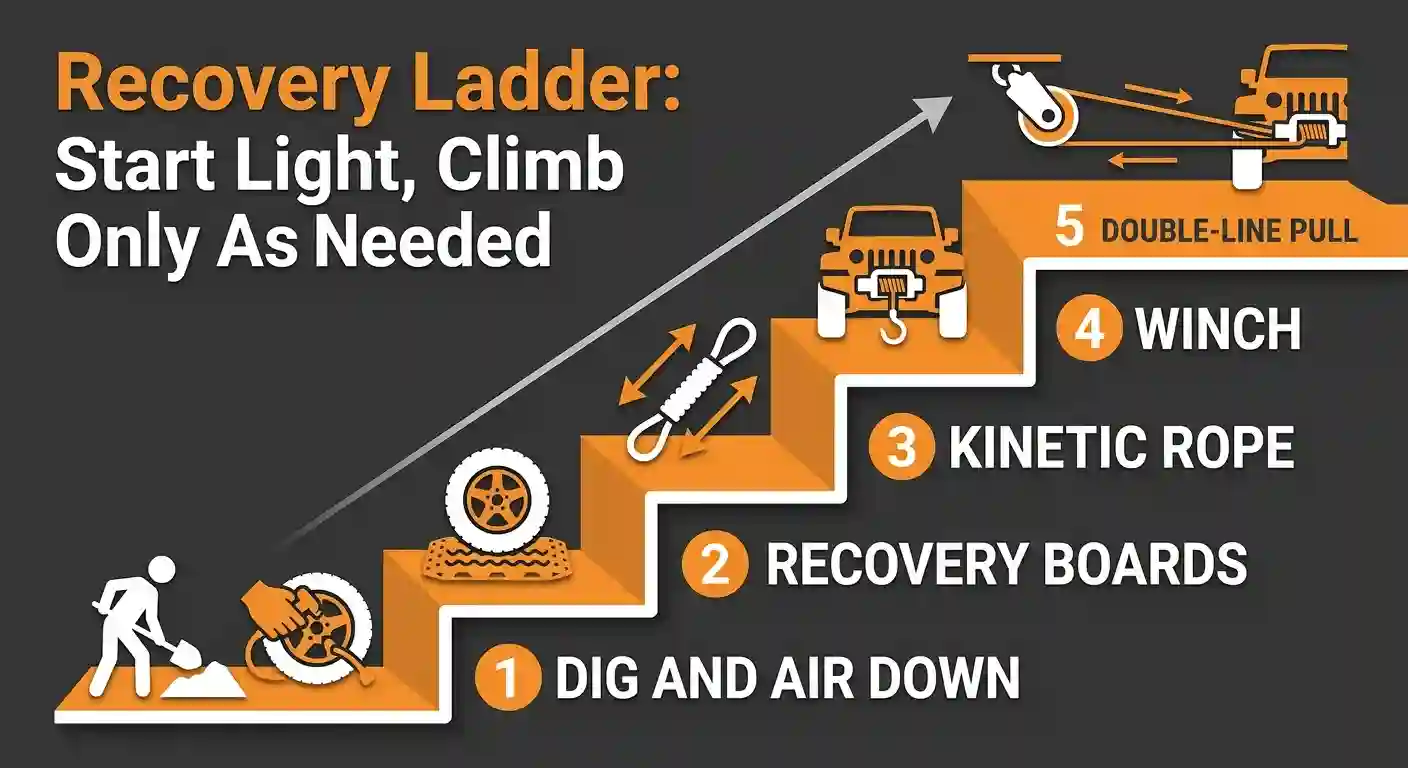
| Wheels spinning in sand or snow | Recovery boards | Kinetic rope |
| Light bog, solid ground nearby | Kinetic rope | Winch |
| Sunk to the axles or frame | Winch | Double-line pull |
| Wheel stuck in a rut or hole | Jack with base plate | Boards or packed rocks |
| Alone, no second vehicle | Winch and tree saver strap | Ground anchor |
When to Use a Recovery Strap or Kinetic Rope
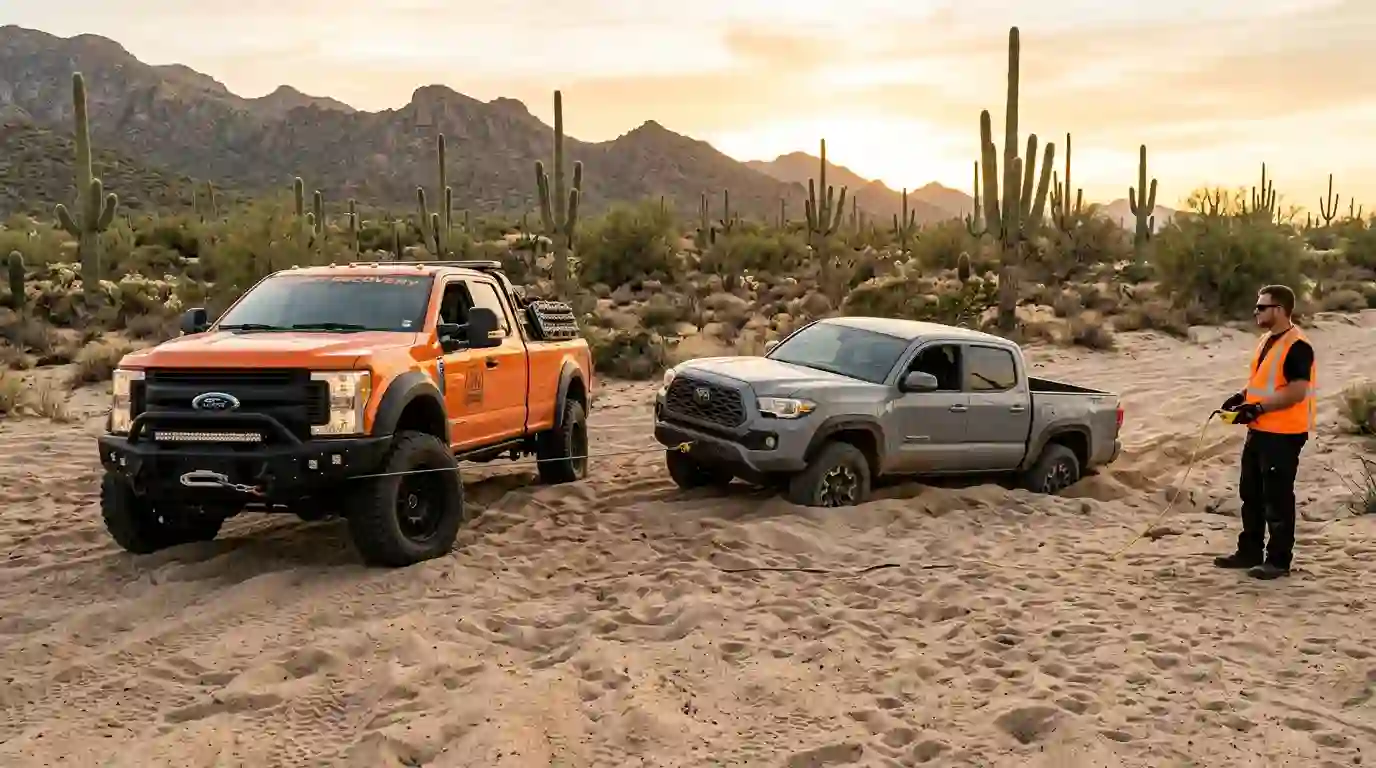
Use a kinetic recovery rope or snatch strap when a stuck vehicle requires a dynamic jerk from a mobile helper vehicle to break free from mud, sand, or snow. The elastic nylon stretches under load, storing kinetic energy that smoothly pulls the immobilized vehicle forward.
Never use standard tow straps or non-elastic winch extension lines for dynamic pulls. Non-stretchy webbing transfers extreme shock loads directly to frame points, which can tear off bumpers or snap hardware into dangerous projectiles.
Dynamic Pulls: Recovery Straps vs. Kinetic Ropes
Both stretch, but not equally. A snatch strap is flat nylon webbing that gives a little. A kinetic rope is thicker and more elastic. It absorbs more shock, which is easier on both vehicles’ recovery points. Rope costs more, while straps pack smaller and cost less.
A plain tow strap doesn’t stretch at all. It belongs on gentle, steady towing, not a snatch.
Run the pull in four steps:
- Line both vehicles up straight, with a little slack in the line.
- Clip each end to rated points with a soft shackle.
- Drape a dampener or heavy blanket over the middle.
- Pull away smoothly. If it fails, reset with slightly more slack and try again.
When to Use Jacks, Anchors, and Shackles
Deploy mechanical jacks, ground anchors, and rated shackles when your vehicle sits high-centered on rocks, stuck in deep ruts, or stranded away from natural anchor points. These tools create secure attachment points or lift tires to allow rock stacking underneath.
Shackles and Hardware
Connect straps and winch lines using rated steel bow shackles or synthetic soft shackles. Soft shackles made from high-molecular-weight polyethylene are significantly safer because they store far less mass if a connection fails. Never attach recovery hardware to unrated factory tie-down loops or trailer tow balls.
Mechanical Jacks
Hi-lift jacks and bottle jacks raise a sunken axle so you can fill deep holes with rocks or traction ramps. Always use a wide jack base plate on soft ground to keep the jack foot from sinking into the dirt under load.
Ground Anchors
When winching in wide-open desert or dune environments without trees or secondary rigs, bury a dedicated ground anchor or spare tire to create a temporary pulling point.
Static Winches & Advanced Rigging
Use an electric winch for controlled, heavy-duty extractions where dynamic pulls are too risky, such as steep inclines, rollover recoveries, or severe mud suction. Winches exert steady, linear force to move heavy loads safely step by step.
- Single-Line Pulls: Connect the winch hook directly to a tree saver strap on a solid anchor using a rated shackle. Ensure at least 4 to 5 full wraps of cable remain spooled on the drum.
- Double-Line Pulls: Pass the winch line through a snatch block attached to your anchor point and run it back to your vehicle’s recovery point. This doubles your winch’s pulling capacity and cuts motor heat in half.
- Winch Dampeners: Always drape a weighted winch dampener or heavy blanket over the middle third of a steel cable or synthetic line to absorb snapback energy if a line breaks.
Common Recovery Mistakes and Safety Rules
Most trail accidents occur when operators rush through extractions or use unrated equipment. Following basic safety protocols protects everyone near the scene.
- Never attach to a tow ball: Trailer hitches are designed for towing, not high-impact dynamic recoveries. They can snap off and act as high-speed projectiles.
- Never step over a live cable: Keep all bystanders standing at a safety distance equal to at least 1.5 times the full length of the extended winch line.
- Wear heavy leather gloves: Protect your hands from steel wire burrs, rope burns, and pinch points when handling cables and shackles.
- Avoid side-loading recovery points: Always align recovery vehicles in a straight line relative to the pull direction to prevent frame twisting or bracket failure.
Inspecting and Replacing Recovery Gear
Regular gear maintenance ensures your equipment works predictably when an emergency happens miles away from pavement.
Before every outing, visually check your off-road recovery tools for signs of wear. Replace synthetic ropes and flat webbing if you spot cuts, frayed strands, melted fibers, or faded load rating tags. Inspect steel shackles and snatch blocks for pin deformation, thread binding, or metal fatigue. Gear stored wet or exposed to heavy UV light degrades much faster than dry, clean equipment.
4×4 Off-Road Recovery in Phoenix, AZ
Navigating rugged desert trails, loose riverbeds, and steep washouts around the Valley demands proper preparation. Even well-equipped rigs occasionally encounter terrain that exceeds self-recovery gear. When severe vehicle high-centering, mechanical failure, or deep desert mud bogs down your vehicle, relying on professional assistance keeps you safe.
For heavy extractions, trailside assistance, or specialized transport, professional operators bring commercial-grade winching equipment to handle complex extractions. Relying on professional Towing Services Phoenix, AZ ensures your rig is extracted without causing structural frame or body damage.
Whether stuck on a remote trail or stranded on local backroads, Ceejays Towing LLC provides reliable emergency response to get your vehicle back on solid ground safely.
Final Thoughts
Good recovery starts before you’re stuck. Carry the right 4×4 recovery equipment, learn your ratings, and practice somewhere safe. Learn when to use recovery accessories off-road 4×4 trails call for, and you protect your truck, your gear, and your crew. If you’re stuck near Phoenix and the pull looks risky, contact us and let a trained crew take it from there.
Frequently Asked Questions
What is the most essential off-road recovery tool to carry first?
A tire deflator and a set of traction boards are the most essential initial tools. Lowering tire pressure expands the contact patch, allowing your vehicle to float over soft sand and loose gravel without digging deep ruts.
Can I use a standard tow strap for dynamic vehicle recoveries?
No, standard tow straps lack the elastic stretch required for dynamic recoveries. Using a static tow strap for a running start pull places shock loads on vehicle frames and recovery points, increasing the risk of structural damage or dangerous hardware failure.
When should I use a snatch block during a winch operation?
Use a snatch block when your winch motor overheats, when you need to change pulling angles around obstacles, or when your rig’s weight requires extra pulling power. A snatch block doubles the winch’s mechanical pulling capacity while reducing strain on the motor.
What recovery gear should a beginner carry?
A beginner should carry a shovel, recovery boards, a kinetic rope, two soft shackles, gloves, and a tire deflator with a compressor. Add a winch, tree saver strap, snatch block, and line dampener once you’ve practiced. Buy rated gear, and match ratings to your loaded vehicle weight.
Can I recover my vehicle alone?
Yes. Solo recovery works with a shovel, recovery boards, or a winch rigged to a tree, rock, or ground anchor. A kinetic rope needs a second vehicle, so it’s not a solo tool. Work slowly, wear gloves, use a line dampener, and stay clear of the cable while it’s under load.