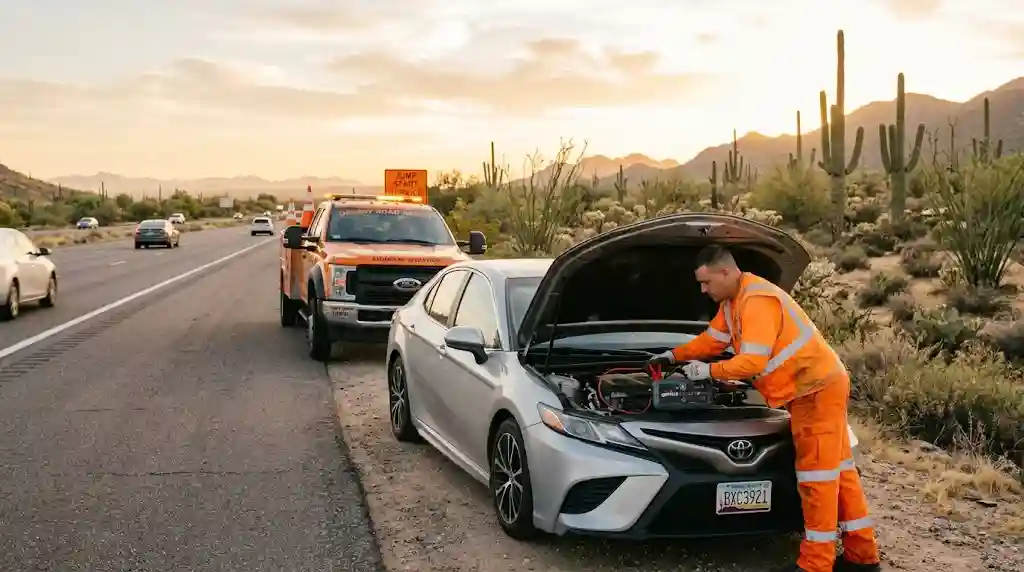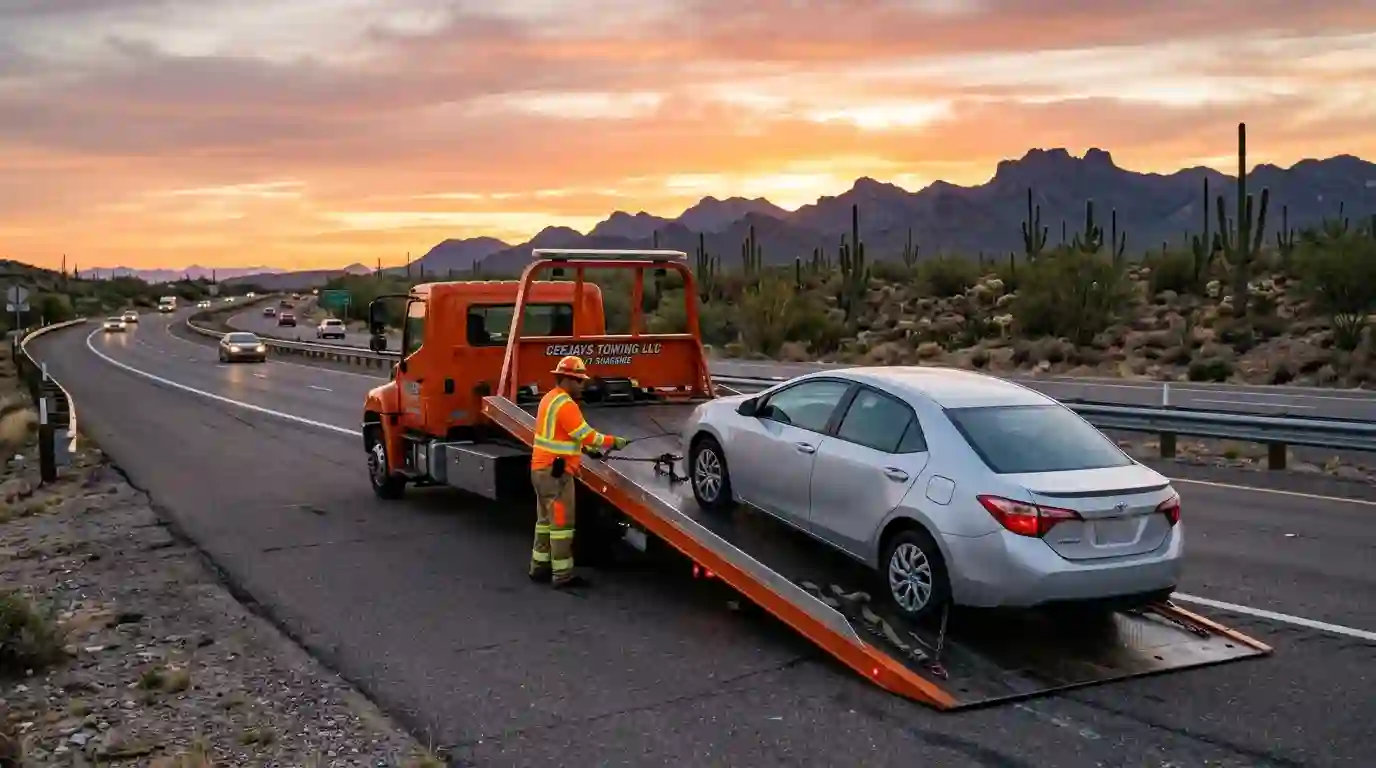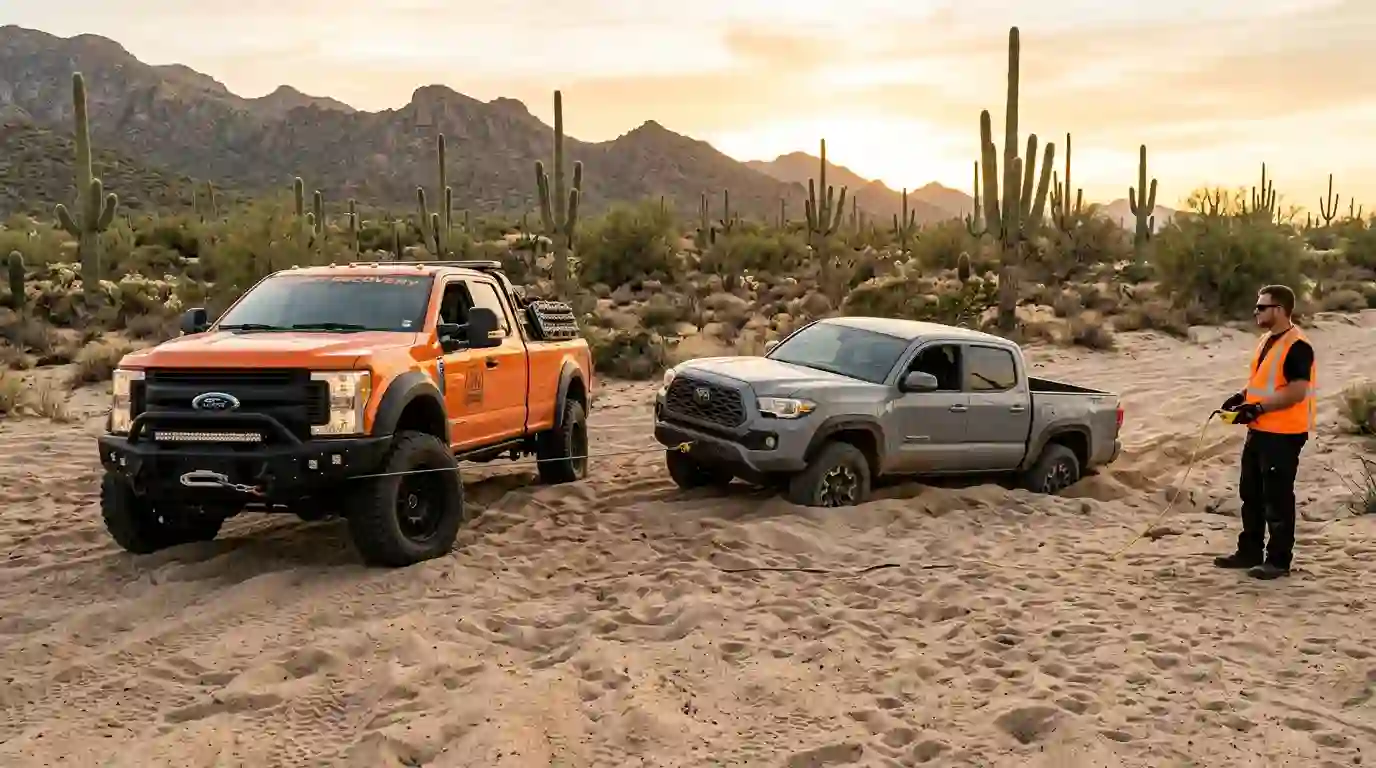
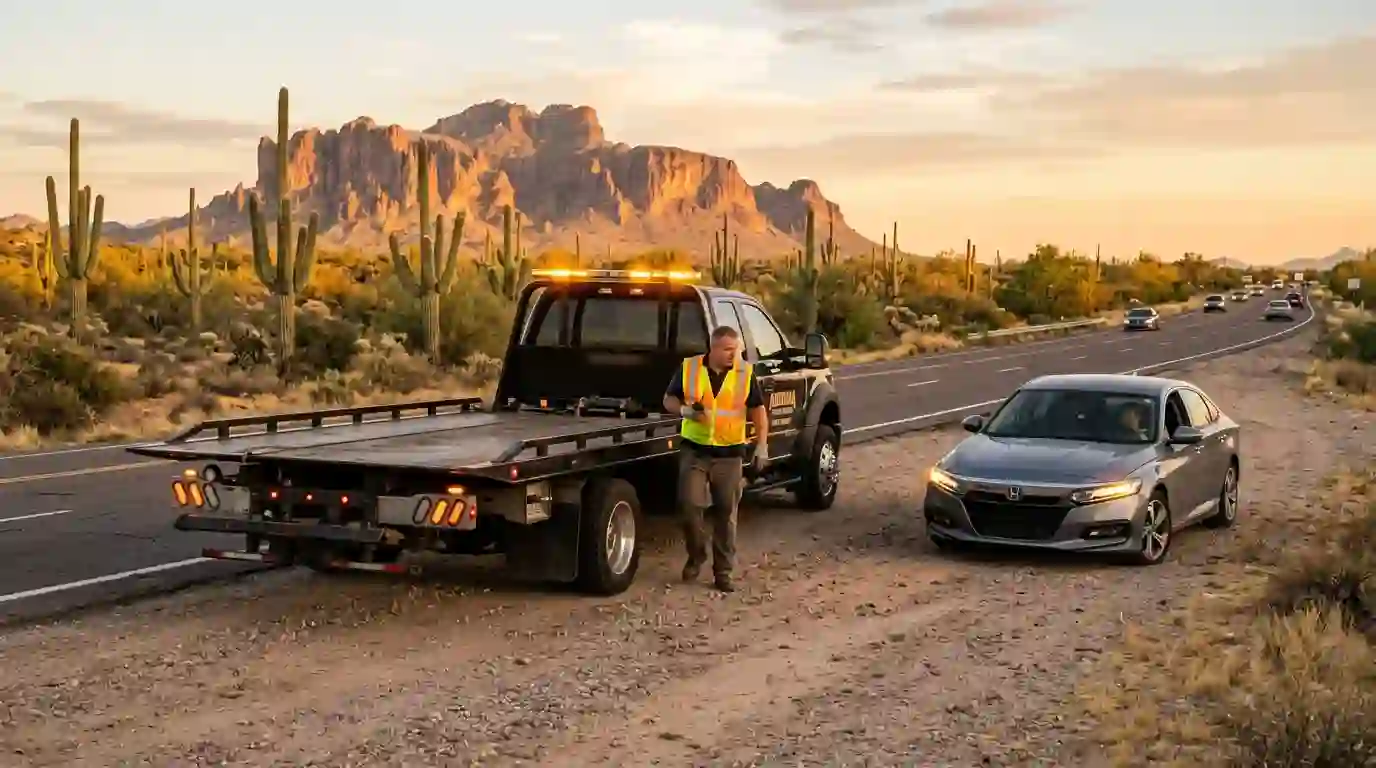
Most tow trucks arrive within 30 to 60 minutes. That’s the quick answer, and it holds in most areas under normal conditions. Rural roads, rush hour, and bad weather can push it to 90 minutes or more. I know the wait feels longer than the clock says, especially when you’re parked on a hot shoulder while traffic rushes past.
If you’re asking how long does it take for a tow truck to arrive, you’re not just curious. You want to plan your next hour. I’ll show you the real timelines, what slows a truck down, and how to get help faster. You’ll also see what to expect in Phoenix, where heat and sprawl change the math.
Average Tow Truck Arrival Time
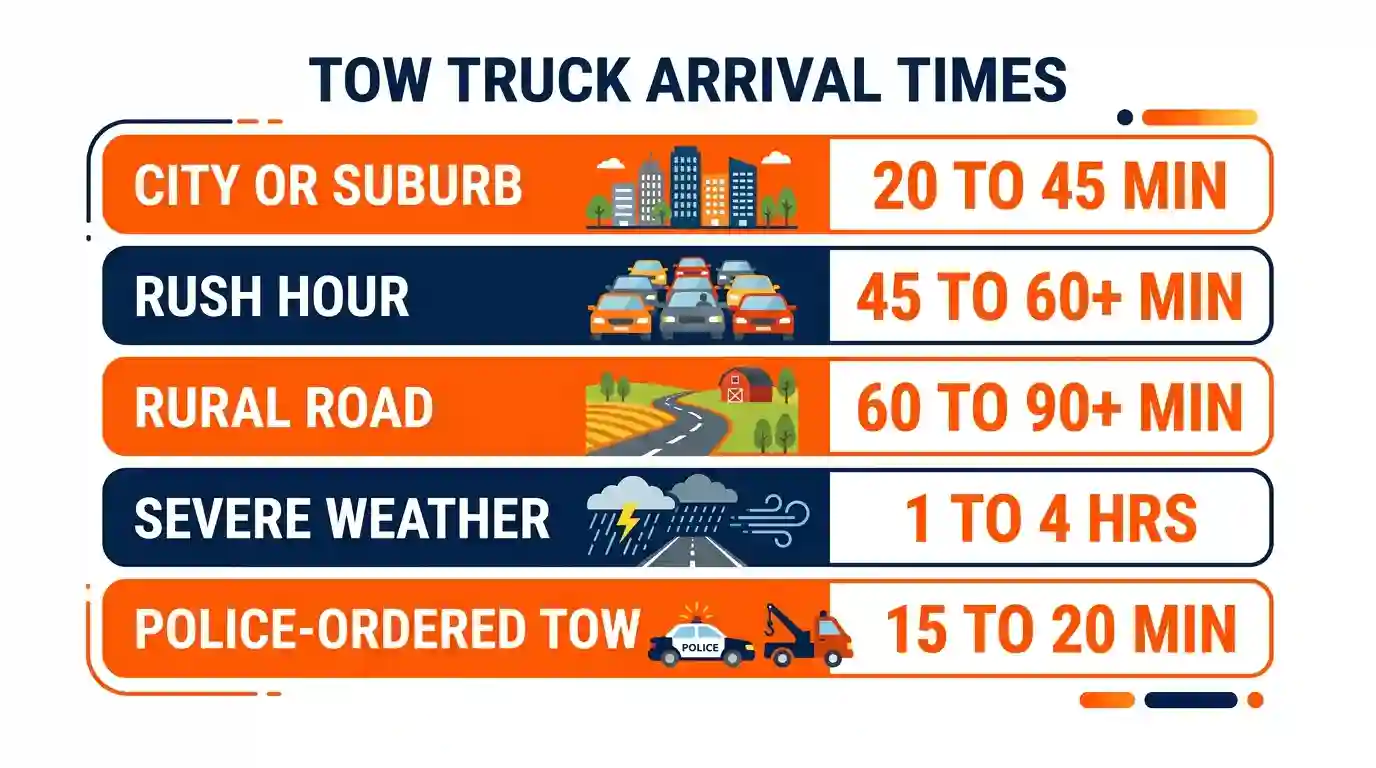
So how long does a tow truck take to arrive? In most areas, the average tow truck response time falls between 30 and 60 minutes. Cities often do better, and rural areas run longer. Treat these numbers as ranges, not promises.
| Situation | Typical tow truck arrival time |
| City or suburb, normal traffic | 20 to 45 minutes |
| Rush hour | 45 to 60+ minutes |
| Rural or remote road | 60 to 90+ minutes |
| Severe weather or holiday rush | 1 to 4 hours |
| Police-ordered tow blocking traffic | 15 to 20 minutes |
Arrival is only one piece of the job. Call and dispatch usually take 5 to 15 minutes. The drive adds 20 to 45 minutes, and hookup takes another 15 to 30. From first call to drop-off, plan on 1.5 to 2 hours.
What Factors Affect Tow Truck Arrival Time?
No two towing dispatches are identical. Understanding why response times vary helps you set realistic expectations while waiting safely.
1. Distance and Location
Your physical location plays the biggest role in how long for a tow truck to come. Suburban streets near major interstate ramps offer straightforward navigation. Remote back roads, unpaved terrain, or confusing parking structures add extra navigation time for the operator.
2. Traffic and Time of Day
Heavy rush-hour congestion slows down tow trucks just like any other vehicle. Morning peak hours from 7:00 AM to 9:00 AM and evening commutes from 4:00 PM to 7:00 PM add significant transit delays. Late-night calls between 11:00 PM and 5:00 AM present a different delay: fewer active crews are on shift, so the assigned truck may travel from further away.
Data Insight: Industry dispatch logs indicate that gridlock traffic adds an average of 15 to 30 minutes to urban response windows. Including accurate mile markers or cross streets when you call helps dispatchers route trucks around traffic bottlenecks.
3. Severe Weather Spikes
Rain, ice, dust storms, and extreme temperatures trigger sudden spikes in breakdowns and accidents. During bad weather, call volumes surge while tow truck drivers must travel at slower, safer speeds. Wait times during severe storms can stretch to 2 hours or more.
4. Vehicle and Equipment Needs
The equipment required to transport your vehicle changes how fast a operator reaches you:
- Standard Wheel-Lift Truck: Ideal for simple front-wheel drive breakdowns; widely available in most fleets.
- Flatbed Tow Truck: Required for all-wheel drive models, low-clearance luxury cars, or severe collision damage; takes longer to source during high-demand periods.
- Heavy-Duty Wrecker: Specialized equipment for heavy commercial trucks, RVs, or winching out of deep ditches; requires custom dispatching.
Direct Local Call vs. Insurance Roadside Programs
Calling a local towing business directly cuts administrative delays. Local dispatchers view active fleet positions in real-time and assign the closest available driver right away.
Third-party roadside membership programs or insurance call centers follow a multi-step verification process:
- You talk to a centralized call center agent.
- The agent verifies your membership details and policy status.
- The request posts to an automated contractor network board.
- A independent contractor accepts the contract rate and dispatches a driver.
These extra steps can add 15 to 30 minutes to your total wait time before a truck starts moving.
Emergency vs Non-Emergency Tows: Who Gets Priority?
Emergency towing requests take priority and usually arrive within 15 to 25 minutes. Police-ordered dispatches for vehicles blocking active traffic lanes or hazardous highway shoulders receive immediate priority over routine parking lot breakdowns.
Dispatchers evaluate incoming requests based on physical danger rather than call order.
Emergency Tows (15–25 Minutes)
A situation counts as an emergency if your car poses an active safety threat. Examples include:
- Vehicles stranded in active lanes on high-speed freeways.
- Accidents where the car blocks intersection lanes or emergency access.
- Vehicles stranded in dangerous locations with vulnerable passengers, such as young children, seniors, or individuals with mobility challenges.
Non-Emergency Tows (30–60+ Minutes)
Non-emergency situations involve vehicles parked safely out of harm’s way. Examples include:
- A vehicle that will not start in a residential driveway or safe retail parking lot.
- Scheduled transports to a mechanic repair shop.
- A flat tire parked on a wide suburban shoulder.
Breakdown of the Total Towing Experience
Understanding each stage of the service helps you plan your day while waiting:
- Initial Dispatch Call (5–10 Minutes): You provide your vehicle details, issue, and exact location to the dispatcher.
- Transit & Route Navigation (20–45 Minutes): The driver travels to your spot using real-time GPS tracking.
- Hookup & Vehicle Loading (15–20 Minutes): The operator secures your vehicle onto the bed or lift assembly safely.
- Transport to Destination: Drive time from your breakdown site to your chosen repair shop or home.
Total elapsed time from your initial phone call to final drop-off generally spans 1.5 to 2 hours under clear conditions.
How Can You Get a Tow Truck to Arrive Faster?
Call right away, give an exact location with cross streets or a mile marker, and describe your vehicle and problem clearly. Choose a local company with 24/7 dispatch, and keep your phone charged and nearby. Clear details cut the time a driver spends searching for you.
Here’s what to tell the dispatcher:
- Your exact location, including highway name, direction, and nearest exit or landmark
- Your vehicle’s year, make, model, and color
- The problem, such as a flat tire, dead battery, or crash
- Whether your car is in a safe spot or a travel lane
- Whether it’s all-wheel drive, lowered, or modified
- Who’s with you, especially children or anyone who needs medical help
Have your key or fob ready when the driver pulls up. If you use wheel locks, find that special key too. Small steps like these can save 10 to 15 minutes at hookup.
Steps to Take While You Wait
Staying safe and prepared helps the operator spot your car quickly and speeds up the loading process.
- Stay Inside the Vehicle: If you are stranded on a highway shoulder, remain inside with your seatbelt buckled. Passing traffic poses a significant risk to pedestrians on the roadside.
- Increase Visibility: Turn on your hazard lights immediately. At night, switch on your interior dome light so drivers see your vehicle from a distance.
- Prepare Keys and Lock Details: Have your key fob ready. If your vehicle uses custom wheel locks for aftermarket tires, locate the lock key in your glove box ahead of time.
- Keep Phone Lines Clear: Stay off non-essential phone calls so the dispatcher or approaching driver can contact you for location updates.
Tow Truck Response Times in Phoenix, AZ
The Valley is wide, and that matters. Phoenix, Mesa, Tempe, Scottsdale, and Glendale sit miles apart, so a driver across town can’t reach you quickly. The I-10, I-17, Loop 101, Loop 202, and US-60 clog during rush hour, and one crash can close lanes for hours.
Weather adds another layer. Monsoon season runs from June 15 to September 30, and sudden storms and dust storms can cut visibility to near zero. Triple-digit heat also strains vehicles. Batteries, tires, and cooling systems tend to fail more often in extreme heat, which means more calls at once.
So how long does it take for a tow truck to arrive in Phoenix? As a general guide, expect 30 to 60 minutes in normal conditions. Peak traffic or a monsoon storm can add more.
If you need help, Ceejays Towing LLC provides Towing Services Phoenix, AZ for breakdowns, accidents, and roadside problems. Share your exact location, cross streets, and landmarks so the dispatcher can send the right truck.
Final Thoughts
When someone asks how long does it take for a tow truck to arrive, I tell them to expect 30 to 60 minutes and plan for more. Location, traffic, weather, and the type of truck you need all move that number. Call early, give clear details, and stay safe while you wait.
A little preparation makes the wait easier. Save a local towing number, keep a charged phone in the car, and know your plan’s rules. If you’re stuck right now, contact us and get a truck on the way.
Frequently Asked Questions
How long does a tow truck take on average?
Standard response times range between 30 and 60 minutes for routine roadside service. City locations usually see faster arrivals than rural roads.
Does calling 24/7 towing speed up response times?
Yes. Around-the-clock dispatch centers keep active drivers on shift overnight, weekends, and holidays, eliminating call-routing delays.
Why do flatbed tow trucks take longer to arrive?
Flatbed trucks are specialized vehicles. Because fleets maintain fewer flatbed units than standard wheel-lift trucks, dispatchers may need extra time to free up a flatbed driver.
What information should I give the dispatcher?
Provide your vehicle year, make, model, color, exact address or highway mile marker, and details about physical surroundings or road hazards.
Can I track my tow truck in real-time?
Many modern independent towing operators and digital dispatch systems send an automated SMS link to your phone, allowing you to watch the driver’s GPS location on a live map.