Your car clicks, the dash flickers, and nothing else happens. You’re stuck, and you want a fair price before you call anyone. How much should a jump start cost? Most drivers pay $50 to $100 for a roadside jump start. Late-night or remote calls can push the bill toward $150.
The price swings based on who you call, when you call, and where you’re parked. In this guide, I’ll break down the average cost of a jump start by provider, show what the fee covers, and flag charges that signal a rip-off. I’ll also compare a jump with a new battery and share what’s normal in Phoenix.
Average Jump Start Cost by Provider Type
Who you call sets the price more than anything else. Think of the fee like a delivery charge. You pay mostly for someone showing up, not for ten minutes of cable work.
| Provider | Typical jump start cost | Best for |
| Towing or mobile roadside company | $50 to $100 | Fast help without a membership |
| Mobile mechanic | $50 to $150 | Unknown cause, on-site diagnosis |
| Roadside assistance membership | $0 per call, $100 to $180 per year | Frequent drivers, multi-car homes |
| Insurance roadside add-on | $0 per call, from about $15 per year | Drivers who already carry a policy |
| Friend, neighbor, or rideshare driver | $0 to $20 | Daytime, safe locations |
National price guides put the average cost of a jump start between roughly $50 and $150. Standard daytime calls usually land near the low end of that range.
A friend with cables is the cheapest fix, but it only works if you feel safe where you’re parked. A mobile mechanic costs more because they can tell you why the battery died. That matters if your car needs a second jump next week.
What Is Included in a Jump Start Fee?
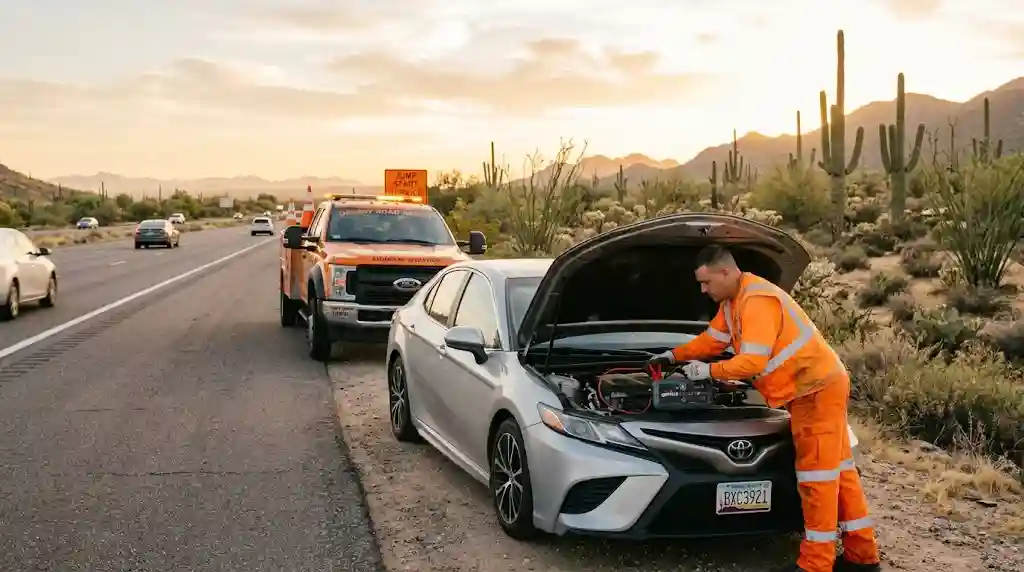
A standard jump start fee covers the technician’s travel time to your specific location, the physical connection of jumper cables or a portable power pack to your battery terminals, and a successful engine crank. It also includes a brief idle period to let your alternator begin recharging the dead battery.
Many motorists assume the technician will also diagnose why the battery died, but a basic service only buys you power to get moving. If your car immediately dies again after the technician disconnects, you’re likely looking at a failing alternator rather than just a drained battery. Always confirm with the dispatcher whether basic alternator testing is included in the base fee before they dispatch a truck.
Factors That Change the Price
Two drivers with the same dead battery can pay very different amounts. Four things explain most of the gap.
Time of Day
Nights, weekends, and holidays usually cost more. Providers keep technicians on standby, and they price that availability into the call. Ask whether an after-hours surcharge applies before you book.
Location and Distance
A driveway is easy. A tight parking garage or a rural road is not. Some companies charge by the mile once you’re outside their normal service area, so share your exact location and ask about distance fees.
Vehicle Type
Trucks, RVs, and luxury cars can cost more. Some batteries sit under a seat or in the trunk, and modern electronics need careful handling. Hybrids and EVs also have a 12-volt battery that needs the right procedure, so confirm the provider can handle your vehicle.
Battery Condition and Extras
A healthy battery that just got drained costs the least. A worn battery may need testing, a second attempt, or a replacement. Each extra step adds to your car battery jump start cost.
Is Roadside Assistance Worth It for a Jump Start?
Roadside assistance memberships are financially worthwhile if you experience multiple vehicle issues per year, but they often cost more out-of-pocket than paying for a single independent service call. Most annual plans range from $80 to $180, meaning you overpay if you only need one boost.
Think of these memberships like insurance policies where the house usually wins. If you pay $120 a year for a club membership and only need a single roadside jump start cost covered, you’ve paid way above market rate for that one service. On the flip side, if you lock your keys in your car, get a flat tire, and need a tow all in the same year, the membership pays for itself instantly. Weigh your vehicle’s age and reliability before locking yourself into an annual subscription.
Jump Start Cost vs. Battery Replacement: Cost Comparison
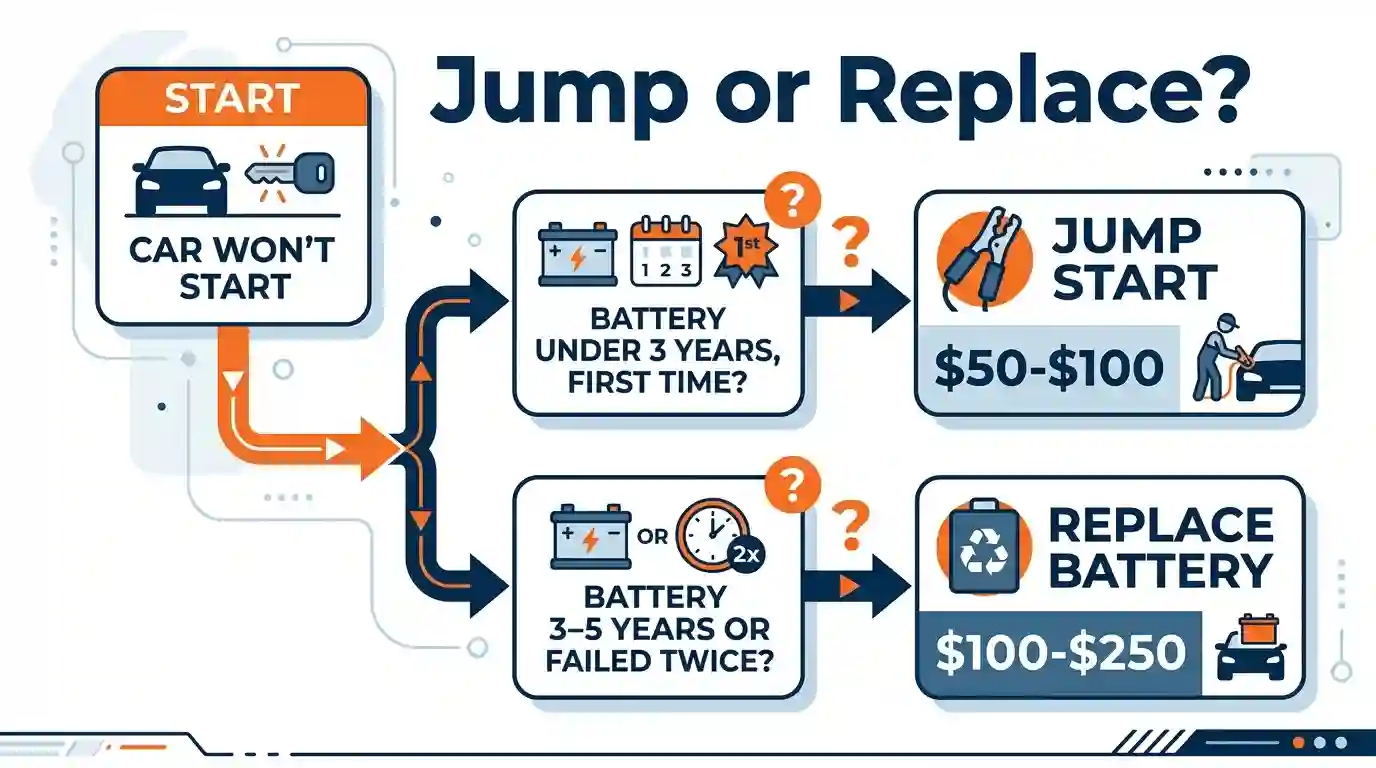
A jump gets you moving. It doesn’t fix a weak battery. Comparing the two costs shows when to stop paying for rescues.
| Option | Typical cost | Choose it when |
| Roadside jump start | $50 to $100 | Battery is young and just drained |
| Battery load test | Often free at auto parts stores | You want to know if it’s failing |
| New battery | $100 to $250 for many cars, more for some types | Battery is old or failed twice |
Most car batteries last about three to five years. Heat cuts that short, so drivers in hot climates often replace sooner. Slow cranking, dim headlights, and a dashboard battery warning light all point to a tired battery.
Here’s my rule of thumb. If a car needs a second jump within a week or two, stop calling for jumps. Test the battery and replace it if it fails. A battery is like a paper cup: it holds water for a while, then it leaks no matter how often you refill it.
Jump Start Cost in Phoenix, AZ
In Phoenix, Arizona, a standard roadside jump start typically ranges from $40 to $90 during normal business hours. Extreme desert heat heavily degrades automotive batteries, making local service demand exceptionally high during peak summer months.
When summer temperatures soar across the valley, local batteries fail at staggering rates. This regional surge means response times can stretch longer, and after-hours rates climb sharply as fleets run at full capacity. If you’re stranded in the Phoenix area, reaching out to trusted local specialists like Ceejays Towing LLC ensures transparent pricing without hidden dispatch gouging. You can easily reach out to our team via our contact us page when you need dependable local support.
Frequently Asked Questions
Does Insurance Cover a Jump Start?
Auto insurance covers a jump start only if you’ve added roadside assistance or towing coverage to your policy. Standard liability, collision, and comprehensive coverage don’t pay for it. Check your policy declarations page or call your insurance provider, because some add-ons start around $15 a year.
How Long Does a Jump Start Take?
A roadside jump start takes about 10 to 20 minutes once the technician arrives. Arrival time is the longer wait. In metro Phoenix, many providers quote 35 to 50 minutes for arrival, and membership clubs can take longer during heat waves or bad weather.
Can a Jump Start Damage My Car?
A proper jump start rarely causes damage, but wrong cable order, reversed clamps, or a surge can harm modern electronics and the battery. Professionals use correct connections and protected equipment. If you’re unsure about the steps or drive a hybrid or EV, call a technician instead.
Why Does My Car Keep Dying After a Jump?
A car that dies again after a jump usually has a battery that can’t hold a charge or an alternator that isn’t recharging it. Batteries older than three to five years fail often, especially in heat. Get a free load test at an auto parts store before paying for another jump.
Is It Cheaper to Buy a Battery or Call for a Jump?
A single jump costs less than a new battery, but repeated calls add up fast. One jump runs about $50 to $100, while a replacement runs $100 to $250. If your battery fails twice in a month, replacing it saves money.