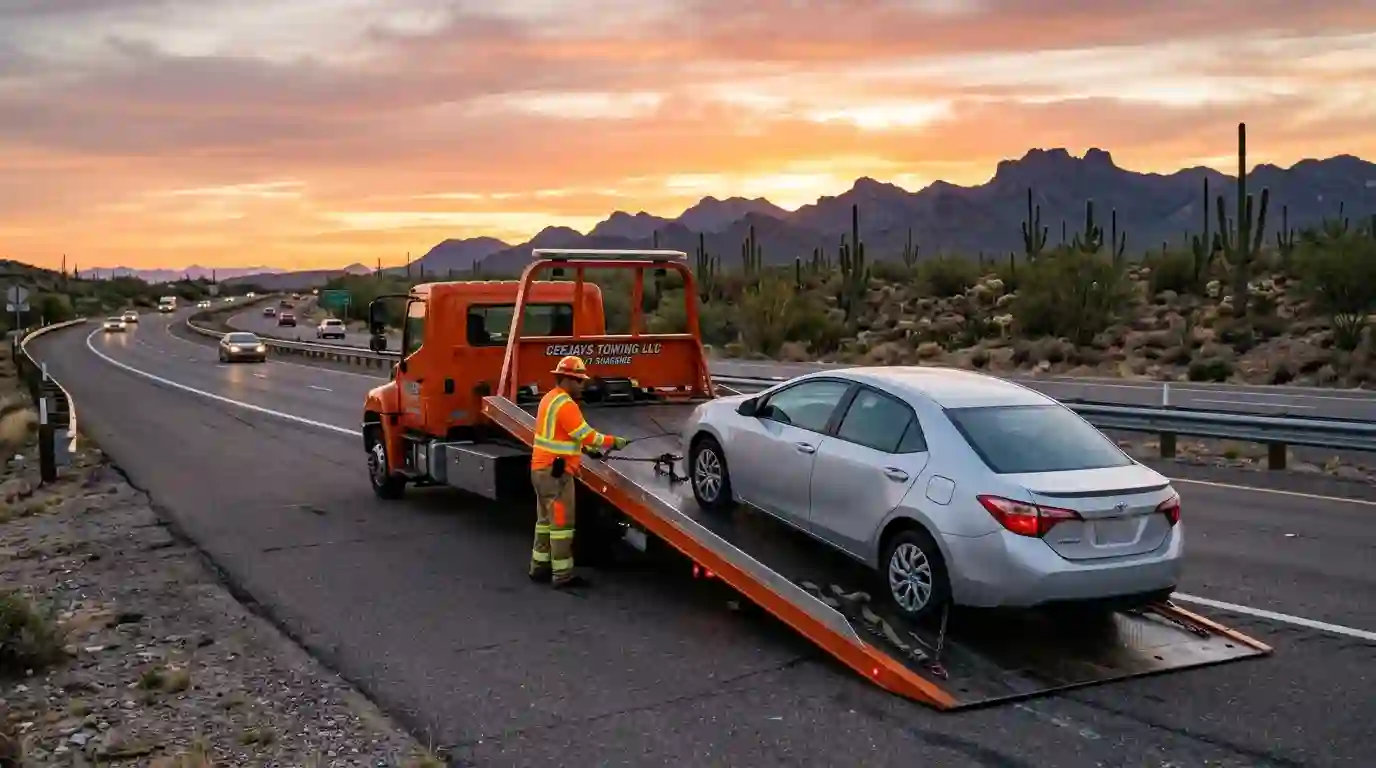
You’ve seen the sign, heard the story, or read the word on a trailer spec sheet. Now you want a plain answer. Quick answer: towing means moving a vehicle or trailer by pulling it behind another vehicle or carrying it on a tow truck.
The word gets tossed around loosely, so I’ll keep this simple. If you’ve ever wondered what is the meaning of towing, this guide gives you the definition, shows how a tow works, and explains the main types. I’ll also cover towing vs. hauling, the terms drivers use, and what to know in Phoenix.
Defining “Towing”: What Does It Actually Mean?
Towing means pulling a vehicle, trailer, or other load behind a powered vehicle. In everyday use, it usually means a tow truck moving a broken-down, wrecked, or illegally parked car. The towing definition covers both jobs: one vehicle pulls or carries another.
Dictionaries treat “tow” as both a verb and a noun. As a verb, it means to pull something along behind you. As a noun, it covers the act of towing, the thing being towed, or the rope or chain used to do it.
The word traces back to Old English togian, which meant “to pull.” That root still fits. A tugboat with a barge, a pickup with a camper, a wrecker with a dead sedan: someone’s always pulling something.
Towing meaning in cars is narrower. So what is towing a car? Think of it as a ride for a car that can’t drive itself. Ever heard someone arrive with kids “in tow”? Same idea. Something follows along behind.
How Does Towing Work?
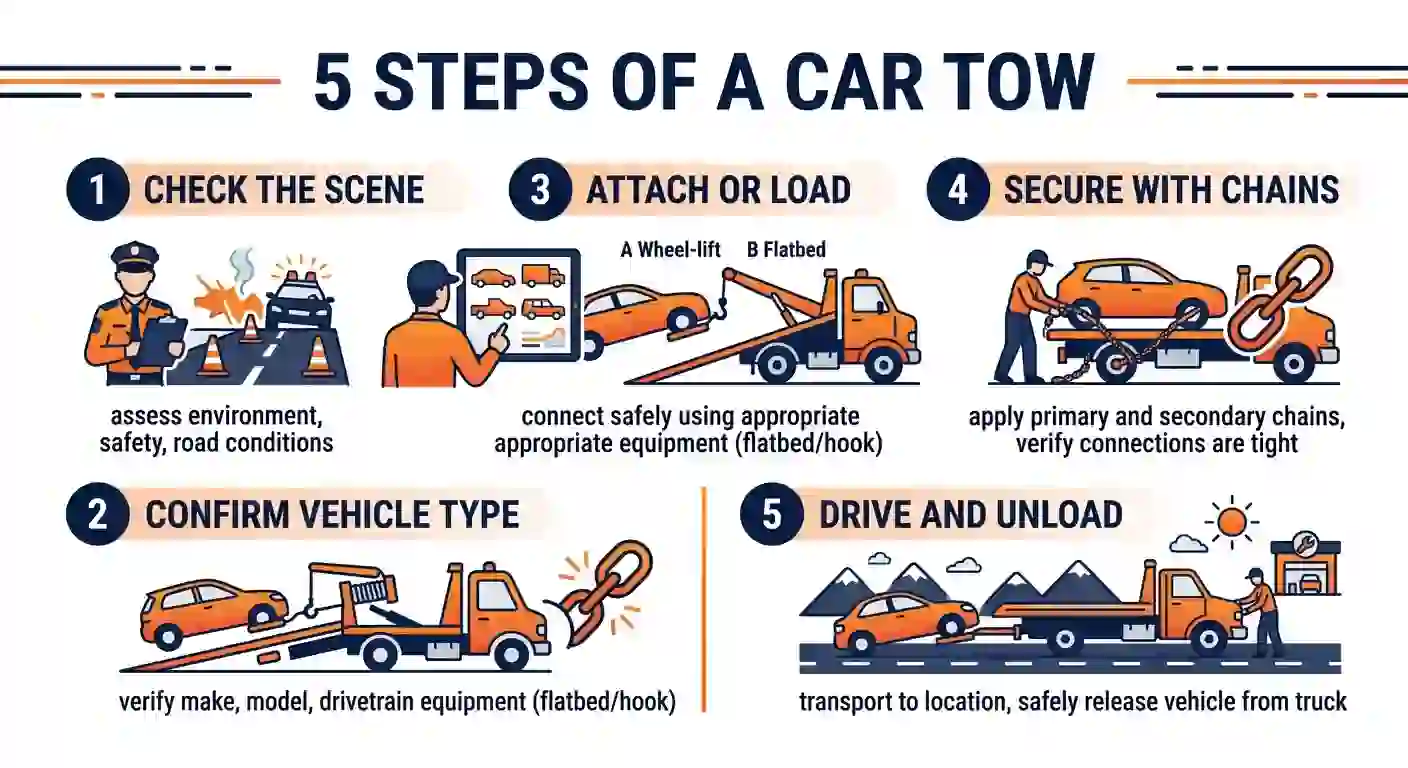
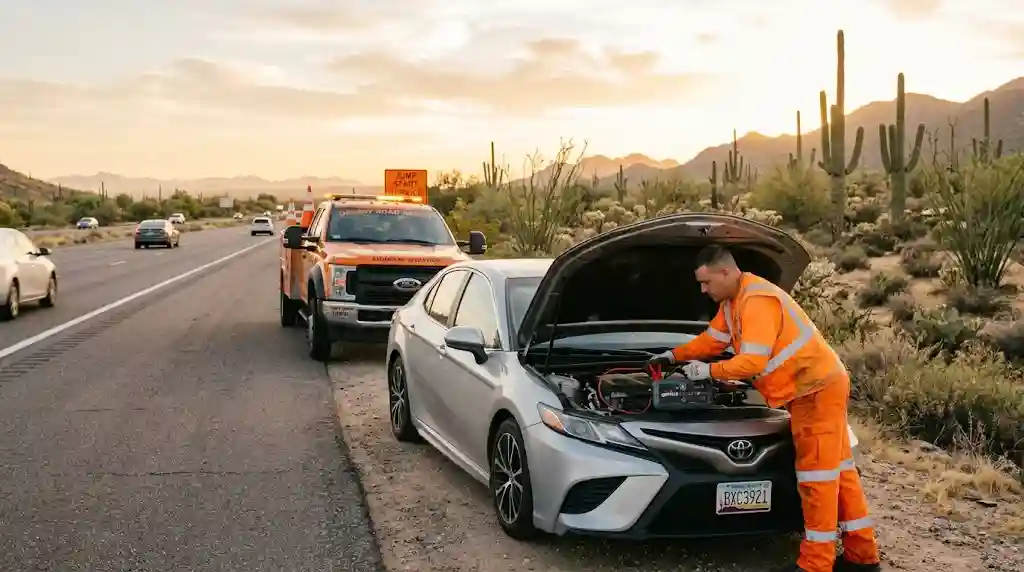
Towing works by connecting a disabled or parked vehicle to a tow truck, then pulling it or lifting it onto a bed and driving it to a destination. The driver secures the vehicle with straps, chains, or a hitch so it can’t slide or swing during transport.
A tow truck carries the gear for the job: a boom, a winch, straps, chains, and wheel dollies. A typical tow follows five steps:
- The driver arrives and checks the scene for traffic and hazards.
- They confirm the vehicle’s drive type, transmission, and any damage.
- They attach it by loading it on a flatbed, lifting the wheels, or hooking the frame.
- They secure it with safety chains and tie-downs, then check the lights.
- They drive to the destination and unload.
Picture a tow as a lift to a friend’s house. The car just sits there while someone else does the driving.
Towing vs. Hauling: What Is the Difference?
While people often use these terms interchangeably, towing and hauling refer to two distinct transport methods:
- Towing: Pulls a load behind the transport vehicle, keeping some or all of the load’s wheels in contact with the pavement.
- Hauling: Loads the cargo or vehicle completely onto the bed or trailer of the transport vehicle, lifting it entirely off the ground.
Choosing between the two depends on the vehicle’s condition, drive system, and total distance. If a car suffers transmission failure or total wheel damage, flatbed hauling offers the safest option to prevent further mechanical wear.
What Are the Different Types of Towing?
Different road scenarios require specialized equipment. Knowing what is the meaning of towing across various setups helps you choose the right transport choice for your situation.
Flatbed Towing
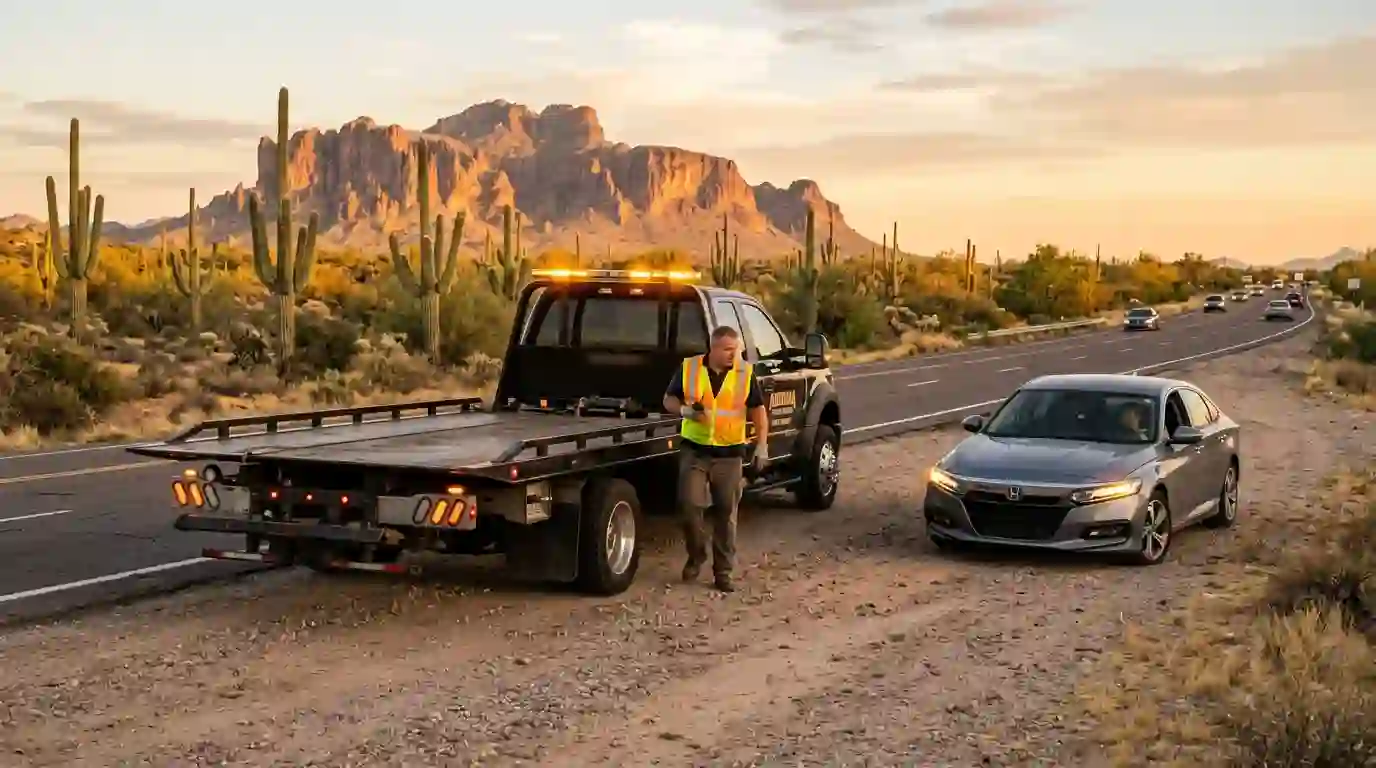
A flatbed truck features a long hydraulic bed that tilts downward to create a ramp. A electric winch pulls the vehicle onto the platform, where all four wheels are securely strapped down. This method provides the safest transport for all-wheel-drive models, luxury cars, and vehicles with low ground clearance.
Wheel-Lift Towing
This modern evolution of the classic hook-and-chain truck uses a metal yoke placed under the drive wheels. A hydraulic hoist lifts two wheels off the ground while the remaining two roll along the road. It works exceptionally well for maneuvering through tight spaces, such as multi-level parking garages.
Flat Towing (Dinghy Towing)
Flat towing keeps all four wheels of the towed car resting directly on the pavement. Motorhome owners frequently use this setup to pull a small passenger car behind a recreational vehicle using a specialized tow bar and base plate assembly.
Heavy-Duty Towing
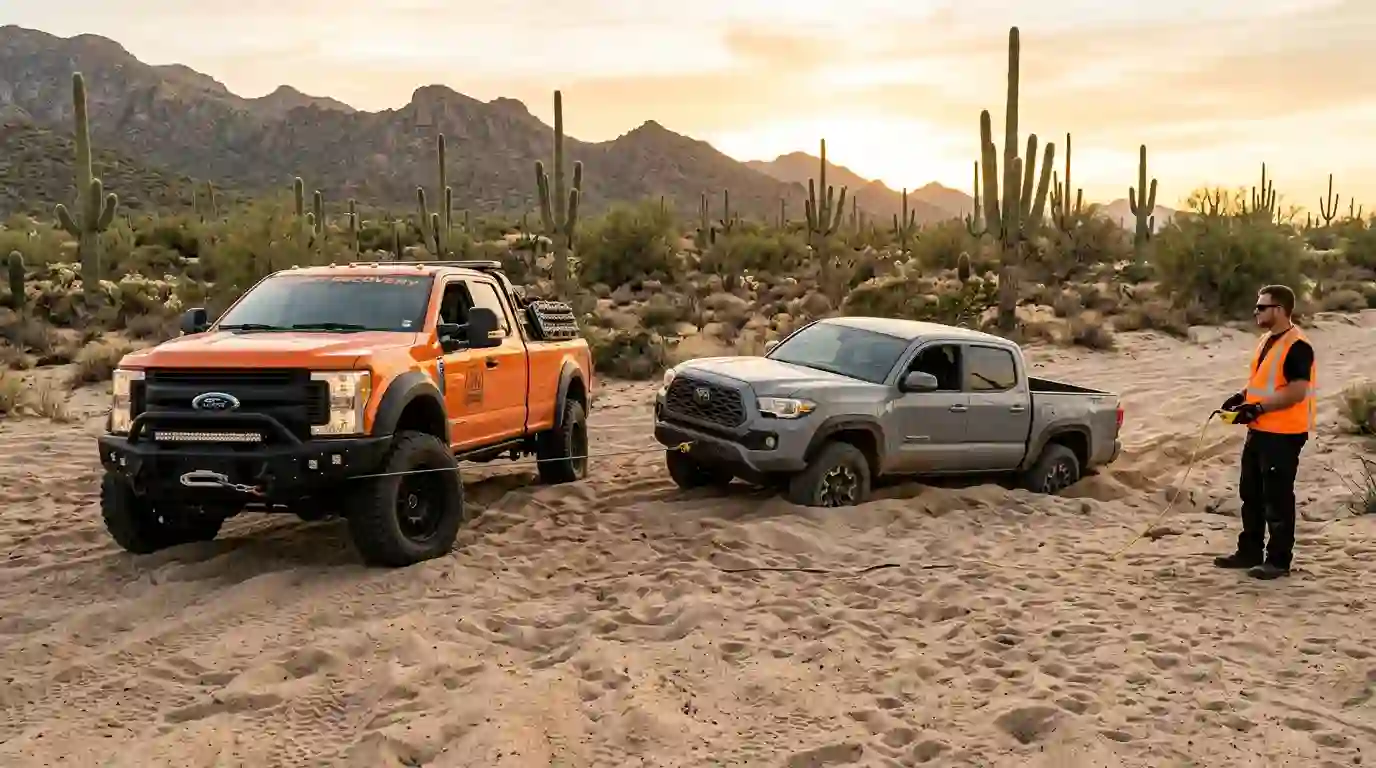
Heavy-duty transport handles massive commercial machinery, school buses, semi-trucks, and municipal vehicles. Specialized recovery trucks use reinforced boom cranes and heavy winches to pull high-tonnage loads safely.
When Is Towing Needed?
Understanding what does towing mean becomes vital during unexpected road emergencies or planned transport situations:
- Mechanical Breakdowns: Engine overheating, transmission failure, or electrical outages leave cars unable to move under their own power.
- Accident Recovery: Collisions often leave vehicles structurally unsafe to drive, requiring immediate removal from traffic.
- Flat Tire Response: When a tire suffers severe damage and no usable spare is available, professional recovery prevents rim damage.
- Relocating Equipment: Transporting boats, horse trailers, or construction tools from one job site to another requires proper trailering.
Key Towing Terms Every Driver Should Know
Understanding basic weight and safety terms ensures you remain safe and within legal limits when transport is needed:
- Towing Capacity: Towing capacity is the maximum amount of weight a vehicle can safely pull behind it as specified by the manufacturer. Exceeding this rating strains the engine, overheats brakes, and creates dangerous handling hazards.
- GVWR (Gross Vehicle Weight Rating): This specifies the absolute maximum weight a vehicle can safely weigh on its own axles, including cargo, passengers, fluids, and tongue weight.
- Tongue Weight: This measures the downward force that the tongue of the trailer exerts on the hitch ball of the tow vehicle. Ideally, tongue weight should represent 10% to 15% of the total loaded trailer weight.
- Safety Chains: Backup steel chains crossed beneath the trailer hitch coupling ensure the trailer stays connected to the lead vehicle if the primary hitch latch fails.
Towing Services Phoenix, AZ
Phoenix adds its own twists. Summer heat strains batteries, tires, and cooling systems. A stalled car on a freeway shoulder in July is more than an inconvenience. Fast roads like I-10 and Loop 101 make a quick, safe tow matter even more.
Arizona also sets rules for towing from private property. Those rules cover who can authorize a tow and what notice applies. If your car vanished from a lot, ask the property manager which company took it, then check the state rules before you pay.
If you need a tow in the valley, Ceejays Towing LLC offers Towing Services Phoenix, AZ for cars, trucks, and SUVs across the Phoenix area. A clear quote and the right truck for your vehicle make a stressful day easier.
Final Thoughts
Understanding what does it mean to tow a car gives you clarity when managing vehicle transport or responding to roadside mishaps. Knowing these differences helps you protect your vehicle investment and maintain safety on every trip. contact us today if you need reliable towing, immediate breakdown recovery, or guidance on moving your vehicle safely.
Frequently Asked Questions
What does it mean to tow a car?
To tow a car means pulling a non-operational or secondary vehicle behind another motor vehicle using a mechanical coupling like a hitch, tow bar, or wheel-lift crane. This process safely moves disabled, illegally parked, or unpowered cars to repair shops or designated storage locations without starting their engines.
Does towing damage a vehicle?
When performed correctly using the right equipment for the drive system, towing will not damage a vehicle. However, towing an all-wheel-drive car with two wheels rolling on the ground can severely damage its transmission system.
What is the difference between towing capacity and payload capacity?
Towing capacity refers to the maximum weight a vehicle can pull behind it. Payload capacity measures the maximum weight a vehicle can carry directly inside its cab and cargo bed.
Can any car be flat towed?
No, not every car can undergo flat towing with four wheels on the ground. Many automatic transmission vehicles require a flatbed truck or tow dolly to prevent serious transmission damage while rolling.