If you searched what is vehicle recovery system, you’ve likely heard the term after a theft scare, a breakdown, or a dealer pitch. Here’s the quick answer. A vehicle recovery system is a hidden tracker paired with a monitoring service that helps police find a stolen vehicle. In the towing world, vehicle recovery also means pulling a stuck or wrecked vehicle to safety.
I’ll keep this simple and practical. You’ll see how a vehicle recovery system works, which types exist, and what they cost. I’ll also cover the limits, the steps to take after a theft, and how tracking differs from towing recovery.
How Does a Vehicle Recovery System Work?
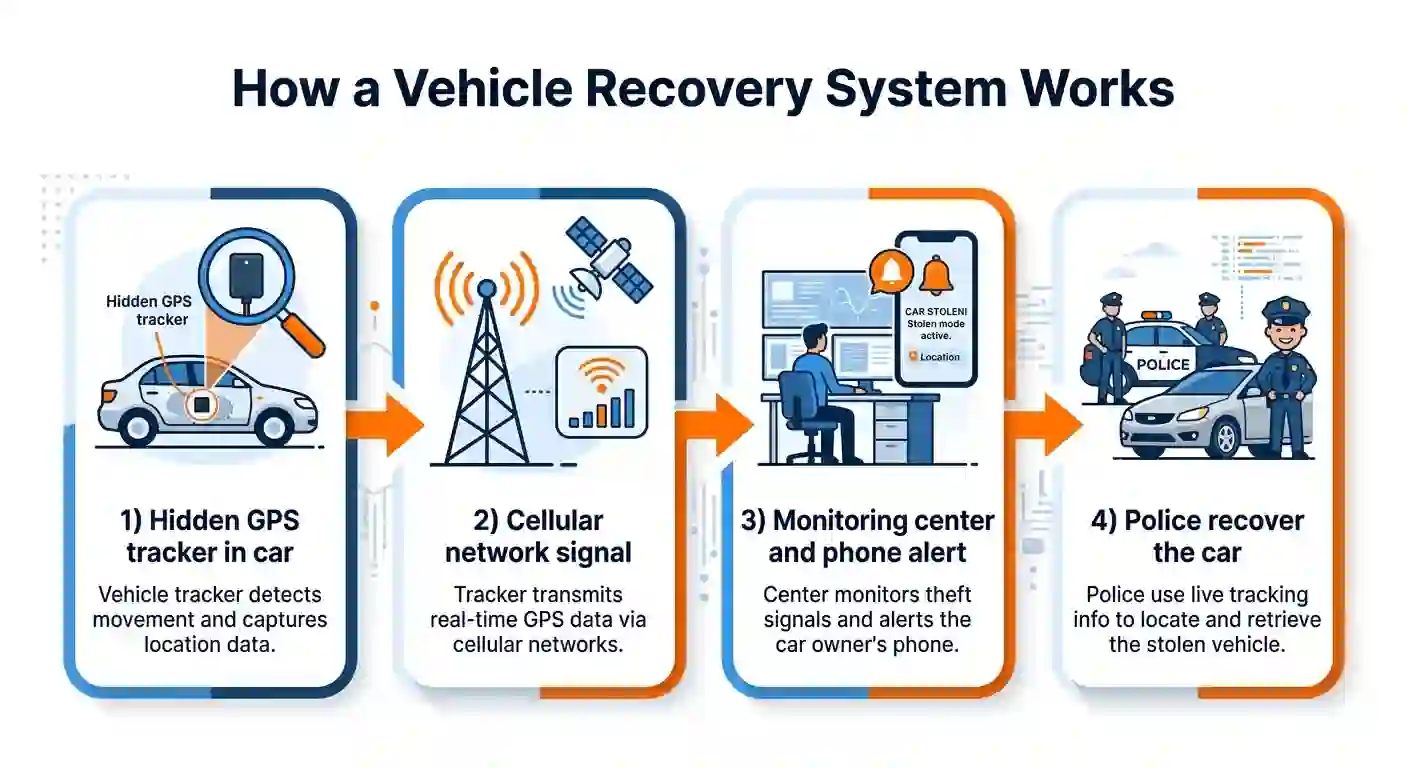
A vehicle recovery system works by pairing a hidden GPS tracker with a cellular connection. The device finds the vehicle’s location from satellites, sends it to a monitoring platform, and alerts the owner or a recovery team. Police then use that live location to find and retrieve the vehicle.
Three parts do the job. Think of it as a relay race where each runner hands off to the next.
- The tracker. A small GPS unit hides inside the vehicle. Good installers wire it to the vehicle’s power and add a backup battery.
- The connection. The tracker sends its location over a cellular network. Update speed varies by provider.
- The monitoring platform. An app or a 24/7 call center receives the data and flags anything odd.
When the vehicle moves without permission, you get an alert. Some systems add geofencing, which pings you when the vehicle leaves a set area. Others offer remote shutdown, so the engine can’t restart once it stops.
After you file a police report, the provider shares the live location with officers. That handoff turns a tracker into a true vehicle tracking and recovery system. Without it, you just own a dot on a map.
What Are the Different Types of Vehicle Recovery Systems?
The main types of vehicle recovery systems include factory telematics, hardwired aftermarket GPS units, radio-frequency trackers, and plug-and-play OBD-II devices. Each option offers varying levels of installation ease, tracking precision, battery dependency, and overall monthly costs.
Wireless Links
1. Factory Telematics Systems
Built directly into the vehicle by manufacturers (like GM OnStar or Toyota Safety Connect), these integrated setups offer crash notifications, remote door unlocking, and active stolen vehicle tracking through factory-installed equipment.
Wireless Links
2. Hardwired Aftermarket GPS Trackers
Professional installers conceal these units deep within the frame or interior dashboard wiring. Connected directly to the main terminal power supply, hardwired trackers typically include an internal battery backup to keep broadcasting even if cables get cut.
Ikon Technologies+ 1
3. Radio-Frequency (RF) Systems
Legacy platforms like classic LoJack use radio waves instead of satellite signals. RF signals easily penetrate concrete parking garages, metal shipping containers, and underground facilities where GPS signals often struggle.
4. Plug-and-Play OBD-II Trackers and Smart Tags
Inexpensive options include dongles that plug directly into the diagnostic port under the steering wheel. Drivers looking for basic peace of mind often use these user-friendly options alongside smart bluetooth tags like Apple AirTags for lightweight asset tracking.
| System Type | Primary Hardware | Installation Effort | Ideal Reader Profile |
| Factory Telematics | Built-in Cellular / GPS | Pre-installed | New car buyers seeking all-in-one safety |
| Hardwired GPS | Concealed 12V Module | Professional Needed | High-theft risk areas & fleet owners |
| Radio Frequency | VHF/FM Transmitters | Dealer Installed | Underground parking protection |
| OBD-II & Smart Tags | Dongles / Coin Tags | Self-Installation | Budget-conscious families & caregivers |
Key Features to Look For When Choosing a System
Not every stolen vehicle recovery system is built the same. Check these first:
- Hidden, tamper-resistant install. A visible device is a device a thief removes.
- Backup battery. Cutting the main cable shouldn’t kill the signal.
- Police coordination. Ask how the provider shares location with officers, and how fast.
- 24/7 monitoring. Thieves don’t keep business hours.
- Alerts. Look for movement, tamper, and geofence alerts.
- Coverage. Confirm the cellular network works where you park and drive.
- Clear fees and guarantee. Know the contract length, the monthly cost, and what happens if the vehicle isn’t recovered.
Running a fleet? Add trailer tracking and route history to the list. Detached trailers are easy targets.
Stolen Vehicle Recovery vs. Towing and Roadside Recovery
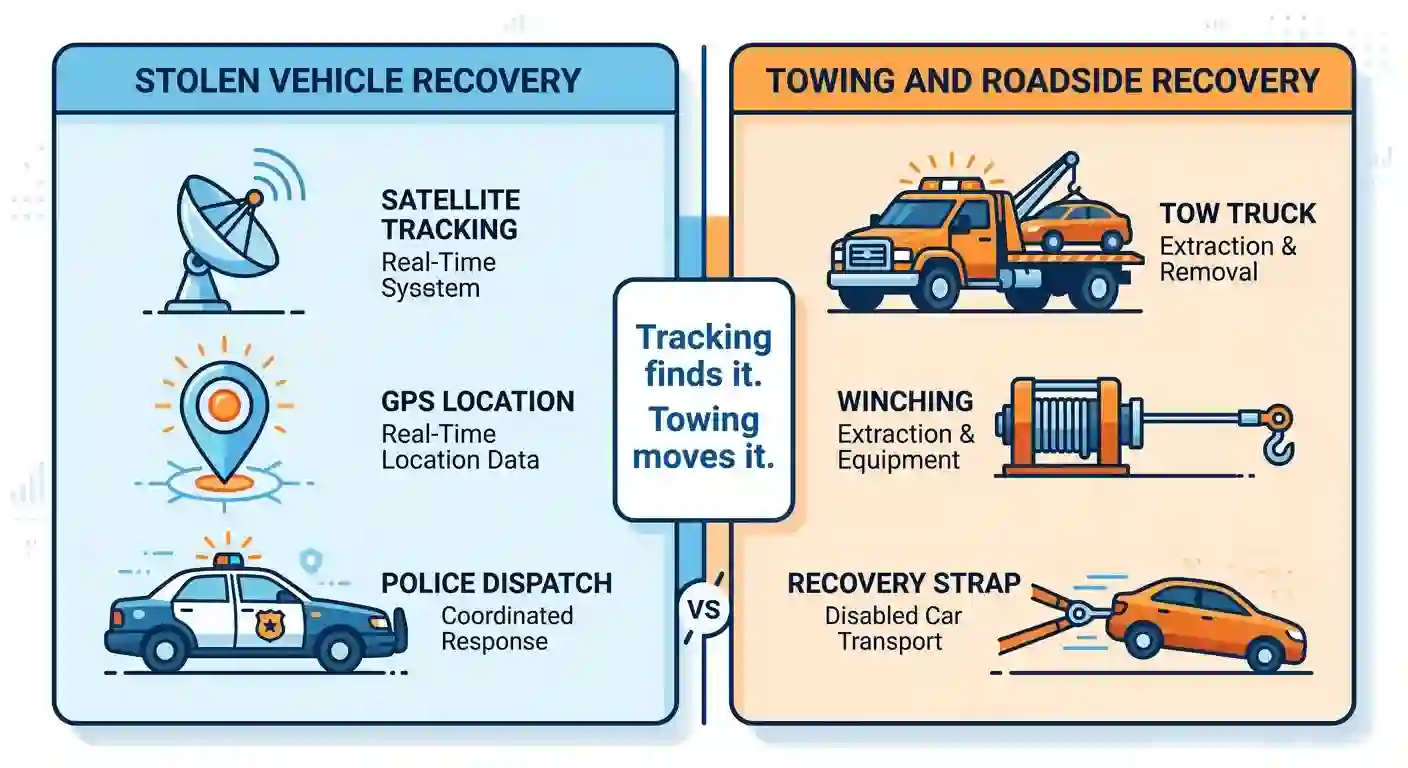
The answer to what is vehicle recovery system depends on who you ask. A security company means tracking. A tow operator means physical recovery. Both are valid, and they solve different problems.
| Stolen vehicle recovery | Towing and roadside recovery | |
| Problem | Vehicle is stolen or missing | Vehicle is stuck, crashed, or broken down |
| Tools | GPS, cellular, RF, monitoring center | Winch, recovery straps, flatbed, wrecker |
| Who responds | Provider and police | Tow operator |
| Goal | Locate and retrieve | Free, load, and move safely |
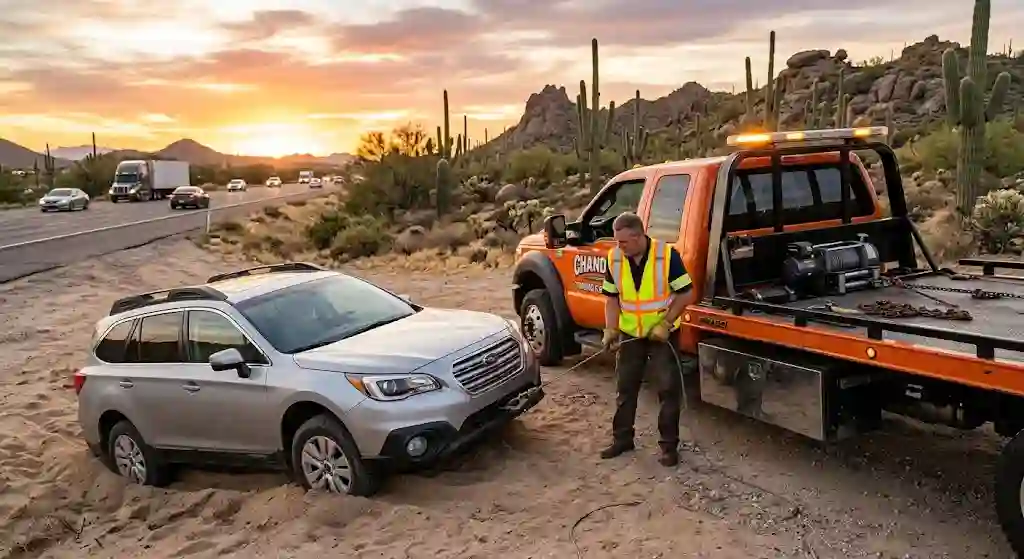
Roadside assistance sits beside both. It covers quick fixes like jump starts, flat tires, and fuel delivery. Recovery means getting a vehicle out of a ditch, off an embankment, or out of soft sand.
How Much Does a Vehicle Recovery System Cost?
A vehicle recovery system costs between $30 for basic smart tags up to $1,200 for professionally installed hardwired systems, with optional subscription fees ranging from $8 to $30 monthly.
Here is a quick price guide:
- Entry-Level Smart Tags: $30 to $90 upfront with no monthly subscription required.
- OBD-II Plug-In Trackers: $80 to $120 for hardware, plus $10 to $15 monthly service fees.
- Professional Hardwired Systems: $700 to $1,200 for installation, plus $10 to $25 monthly monitoring plans.
Limitations of Vehicle Recovery Systems
The limitations of vehicle recovery systems include signal blockages in deep underground garages, potential battery drain issues, reliance on regional cellular coverage, and vulnerability to signal-jamming devices.
- Satellite Blind Spots: Thick concrete floors and subterranean parking decks can block standard GPS tracking signals.
- Cellular Dead Zones: Tracking platforms depend on mobile data networks; rural areas with sparse coverage may delay location updates.
- Battery Drain Risks: Older or poorly wired aftermarket systems can slowly drain car batteries if left parked for extended periods.
Final Thoughts
Understanding what is vehicle recovery system options empowers family caregivers, seniors, and vehicle owners to make confident, safe choices. Whether you choose lightweight OBD-II trackers or hardwired recovery units, combining smart digital monitoring with physical emergency support gives you total peace of mind on every journey.
If your car faces mechanical failure, mud off-road ditching, or requires professional haul-away support in the Phoenix metro area, contact us at Ceejays Towing LLC for prompt, reliable Towing Services Phoenix, AZ today.
Frequently Asked Questions
How do I know if my car already has a vehicle recovery system?
Check your owner’s manual, purchase paperwork, or window stickers for GPS tracking or recovery labels. Look for a companion app from your dealer or automaker, such as OnStar. If you’re unsure, call the dealership with your VIN and ask whether a tracking service was installed or activated.
Can police track a stolen car with a recovery system?
Yes. After you file a police report, the provider shares the vehicle’s live location with police. Some systems work directly with law enforcement, and others send a tracking link. Police still lead the recovery, so don’t try to retrieve the vehicle yourself.
Is an AirTag a vehicle recovery system?
Not really. An AirTag is a low-cost item tracker that relies on nearby Apple devices to report its location. It can help you find a stolen vehicle, but it has no monitoring center, no police coordination, and no theft alerts. Treat it as a backup, not a full system.
Does a vehicle recovery system work without cell service?
Not always. Most systems need cellular coverage to send location data. Some units store the last known position and report it once service returns. Some RF-based systems can work where cell signals fail, but they need nearby police equipment. Coverage gaps and underground garages can still delay tracking.