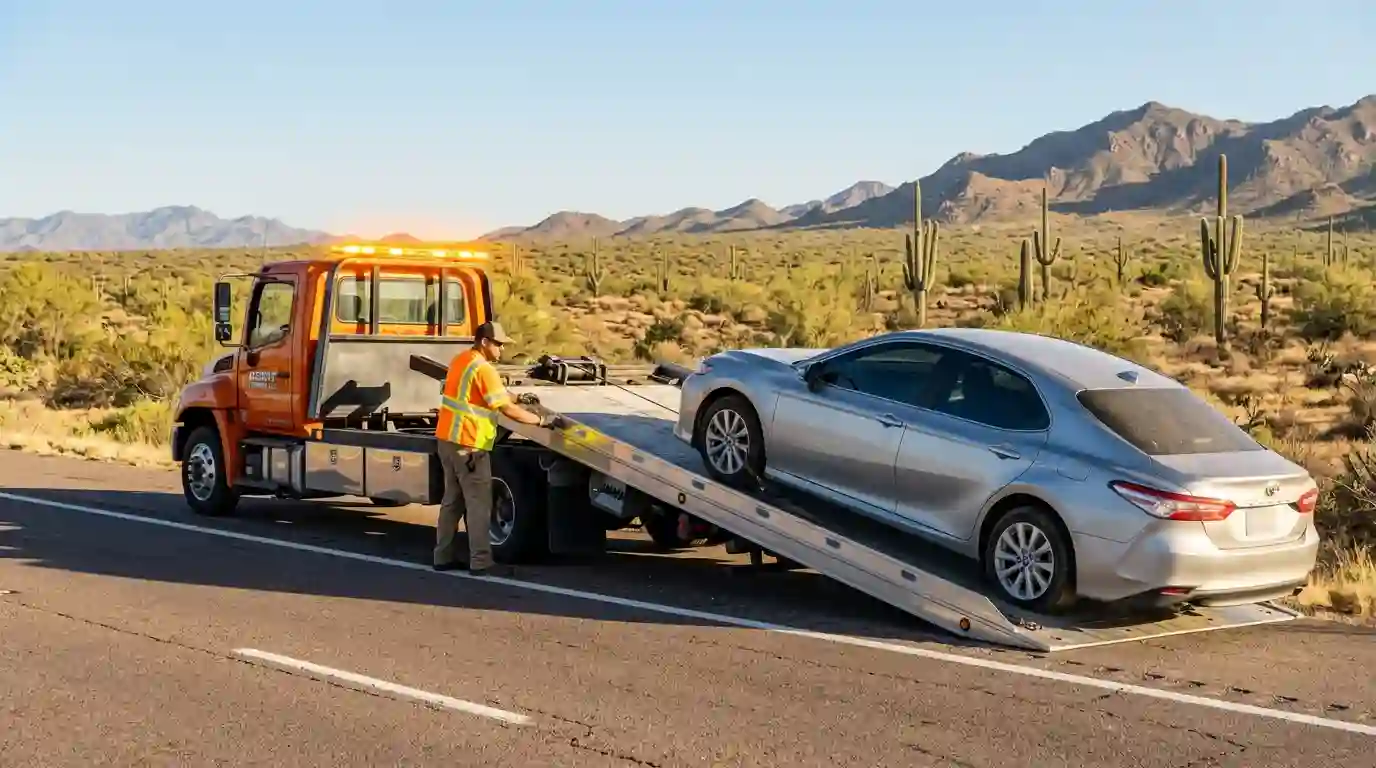
Your car just quit, and you’re stuck between a rock and a hard place. You want help fast, and you don’t want to overpay. I’ll show you how to call a tow truck the right way, even if you’ve never done it before.
The quick answer: get your car to a safe spot, call your roadside provider or a licensed local tow company, and give the dispatcher your exact location, vehicle details, and destination. Then wait somewhere safe. Below, I cover when to call, who to call, what to say, what it costs, and how to spot a company you can trust.
What to Do First When Your Car Breaks Down
When your vehicle breaks down, immediately turn on your hazard lights, steer off the road onto a wide shoulder if possible, set the parking brake, and remain safely inside with your seatbelt buckled.
Your safety comes before anything else. If you’re on a busy highway, stepping out of the vehicle can expose you to oncoming traffic. Stay inside with the doors locked while you figure out who to call for a tow truck. If smoke or flames appear, carefully exit through the door furthest from traffic and wait behind the safety guardrail.
Place your emergency kit on the dashboard or passenger seat if you can reach it safely. Brightly colored items, flares, or reflective triangles alert other motorists to your position while you wait for assistance.
When Should You Call a Tow Truck?
You should call a tow truck when your car can’t move safely under its own power. That includes a car that won’t start after a jump, a flat tire with no spare, overheating, brake or steering trouble, a blocked lane, or accident damage that makes driving risky.
Knowing when to call a tow truck saves money and keeps you safe. Driving a damaged car can turn a small repair into a big one. A flat can wreck the wheel. An overheated engine can seize. If a warning light, a burning smell, or a grinding noise tells you something’s wrong, pull over and stop.
Not every problem needs a tow. A dead battery often needs only a jump start. A flat may need only a tire change, and an empty tank needs fuel delivery. Ask before you pay for a full tow.
What Information Do You Need When Calling a Tow Truck?
When you call, give your exact location, a callback number, your vehicle’s make, model, and color, what’s wrong, and where you want it towed. Add the license plate and say if the car starts or rolls. Dispatchers use these details to send the right truck.
If you’re wondering what information you need to call a tow truck, think of the dispatcher as a doctor. More symptoms mean a better diagnosis. Have this ready:
- Exact location: address, cross streets, highway and direction, mile marker, or a pinned phone location.
- Callback number: so the driver can reach you.
- Vehicle details: make, model, color, and license plate.
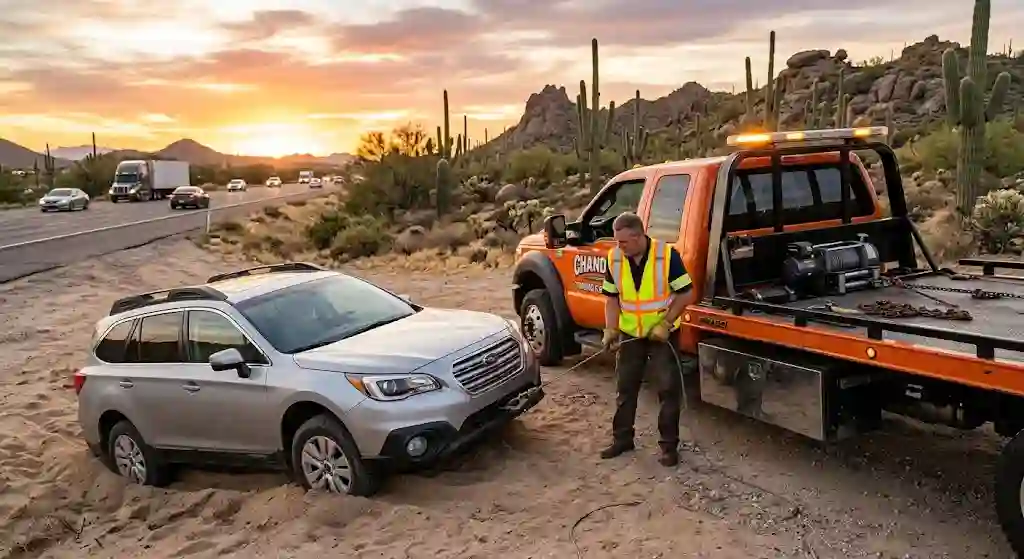
- The problem: won’t start, flat tire, accident, or stuck in sand or mud.
- Drive type: front-wheel, rear-wheel, all-wheel, or electric. It decides which truck fits.
- Car condition: whether it rolls, steers, and goes into neutral.
- Destination: home, a repair shop, or a dealer.
- Tight spots: a live lane, a parking garage, or off-road.
Missing a detail isn’t a dealbreaker. No mile marker? Look for an exit sign or a nearby business.
How to Call a Tow Truck Step by Step
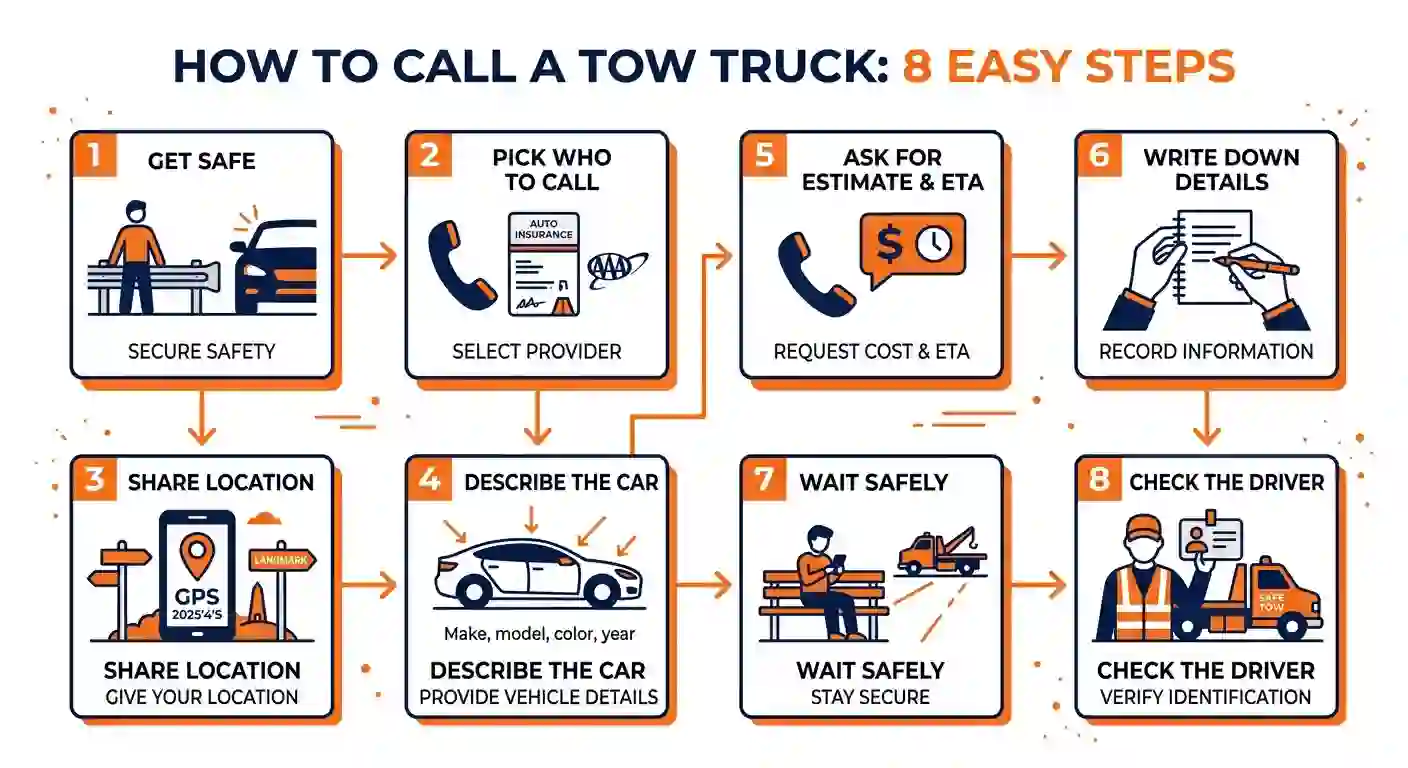
Calling a tow truck involves assessing your coverage, dialing a local dispatcher or roadside operator, providing vehicle and location details, confirming upfront pricing, and waiting safely for arrival.
1. Check Your Current Coverage
Before dialing a private company, check if you have existing roadside assistance through your car insurance policy, vehicle warranty, credit card, or motor club membership like AAA. These programs often cover the first few miles of towing at no out-of-pocket cost.
2. Contact the Right Operator
If you don’t have membership coverage, search online for a reputable nearby provider or use a pay-per-use app to find how to get a tow truck to come to you. Dial their dispatch line directly. Avoid calling emergency services like 911 unless your vehicle is actively blocking a fast-moving lane or posing a direct traffic hazard.
3. Relay Your Details Clear and Fast
Explain your situation clearly to the operator. State your exact spot, vehicle type, and where you need the car taken. This ensures they send the correct equipment on the first attempt.
4. Confirm Pricing and ETA
Ask for an estimated time of arrival and a direct price quote before approving the dispatch. Clarify whether the price includes base hook-up charges and per-mile transport fees.
5. Wait Safely
Stay inside your locked vehicle with your seatbelt fastened until the operator arrives. Once the driver pulls up, verify their company name and credentials before handing over your car keys.
How to Choose the Right Tow Truck Type
The right tow truck depends on your car’s drivetrain and location: flatbed trucks suit all-wheel drive and electric vehicles, while wheel-lift wreckers fit tight spaces and parking garages.
Using the wrong equipment causes expensive damage to your vehicle’s transmission or suspension. When learning how to order a tow truck, specify your car’s setup so dispatch sends the correct rig:
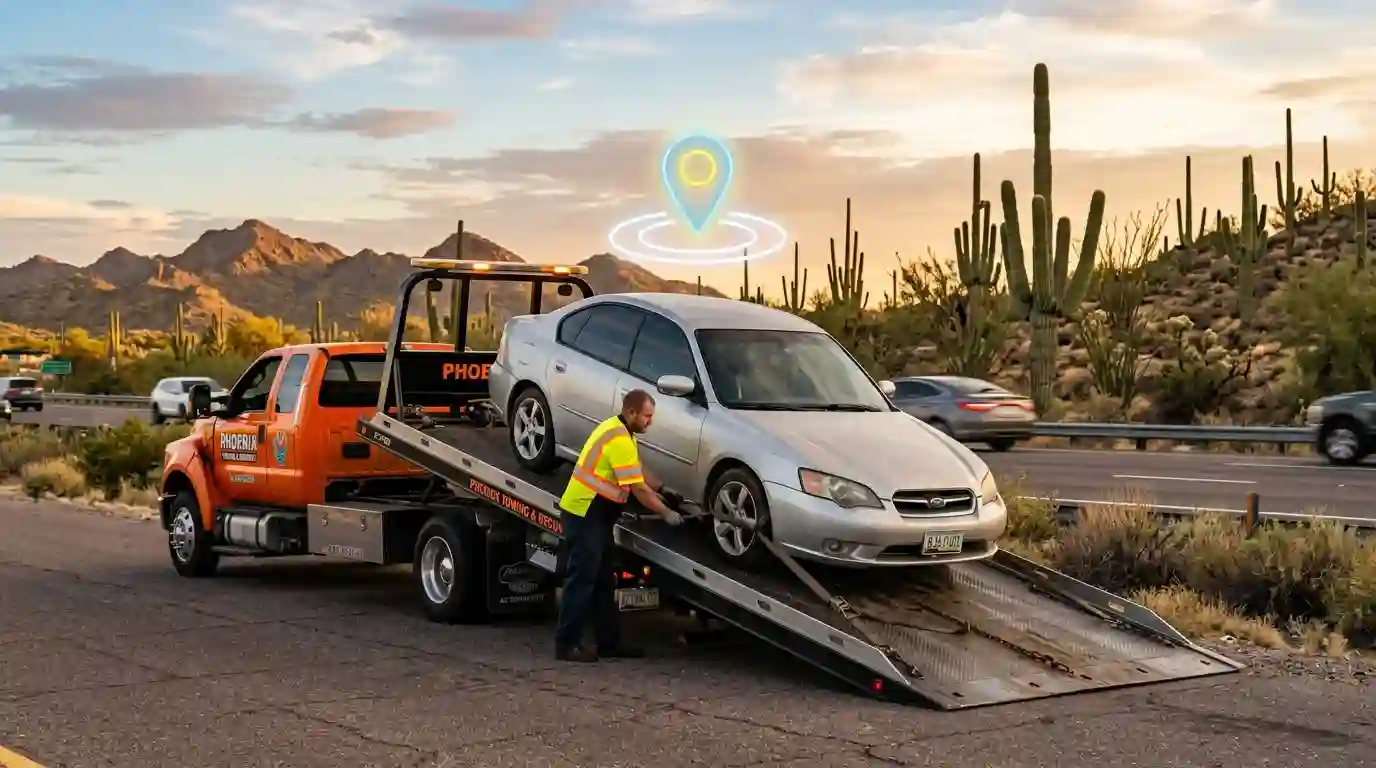
- Flatbed Tow Trucks: The safest option for almost every vehicle. The entire car rests on a hydraulic bed, preventing wear on tires and drivetrains. Mandatory for All-Wheel Drive (AWD), Four-Wheel Drive (4WD), low-clearance sports cars, and Electric Vehicles (EVs).
- Wheel-Lift Wreckers: These hook onto two tires while the other two roll on the pavement. Ideal for short distances, Two-Wheel Drive (2WD) sedans, or pulling cars out of tight spaces.
- Low-Clearance Tow Trucks: Specialized compact wreckers built with a low roofline to enter underground parking structures and multi-level garages.
How Much Does It Cost to Call a Tow Truck?
Calling a tow truck typically costs between $75 and $125 for a basic hook-up fee, plus $3 to $7 per mile driven after the initial distance allowance.
| Fee Type | Average Cost Range | Description |
| Base Hook-Up Rate | $75 – $125 | Flat charge just to connect your vehicle to the truck. |
| Per-Mile Charge | $3 – $7 / mile | Added rate assessed for every mile traveled past the base limit. |
| Winching / Recovery | $50 – $200+ | Extra labor charge if your car is stuck in mud, snow, or a ditch. |
| After-Hours / Holiday | $25 – $75 | Surcharge applied for late-night or holiday emergency service calls. |
Always ask for an itemized breakdown on your receipt. If you pay out-of-pocket, keep this document to submit to your auto insurance provider for reimbursement if your policy includes roadside coverage.
How to Choose a Reliable Tow Company
A tow truck only helps if the company behind it plays fair. Look for these green flags:
- Licensed and insured, with proof on request
- A clear quote before dispatch
- A marked truck and a named driver
- A local address and steady, recent reviews
- A real person who answers the phone
Watch for these red flags:
- A driver who shows up uninvited at an accident scene
- Vague pricing, or “we’ll tell you later”
- Pressure to sign a blank form
- No clear answer on where your car’s going
When in doubt, hang up and call the next company.
How to Handle Unauthorized Vehicles on Private Property
To legally tow an unauthorized vehicle from private property, verify local posting regulations, ensure visible warning signage is installed, and contact a licensed towing company or local parking enforcement.
Property owners often deal with abandoned or illegally parked cars blocking driveways and spaces. You cannot simply hook up a car yourself or call any random truck without following local codes.
For single-family residential properties, homeowners generally have the right to request immediate removal of vehicles parked without permission. For commercial or multi-family properties, clear warning signs must be posted near entrances detailing parking rules and tow warning policies before a vehicle can be legally moved.
Local Emergency Dispatch & Service Options
When vehicle troubles strike in the Valley, getting prompt, trustworthy service makes all the difference. For fast local recovery, drivers rely on Towing Services Phoenix, AZ to handle everything from emergency roadside jump-starts to flatbed transport.
Whether you need low-clearance garage recovery or flatbed hauling, Ceejays Towing LLC delivers round-the-clock dispatch with clear pricing and professional operators. Keeping a trusted local towing service saved in your phone contacts ensures you’re never left helpless when unexpected breakdowns occur.
Final Thoughts
Knowing how to call a tow truck turns a stressful roadside emergency into an easy, manageable process. Always prioritize your safety first, gather key vehicle details before placing the call, confirm all pricing upfront, and pick a licensed local operator. Contact us today to save our dispatch line so you’re fully prepared for any unexpected breakdown.
Frequently Asked Questions
Can a tow truck driver carry passengers in the cab?
Yes, most tow truck drivers can carry up to two passengers in their cab, provided there are functional seatbelts and local health guidelines permit passenger transport.
If you have a larger family or extra passengers with you, inform the dispatcher immediately so they can send a larger crew-cab truck or help arrange a ride-share service to take your group safely off the road.
What happens if my car gets damaged during a tow?
If your car gets damaged during a tow, document the damage with photographs immediately, contact the towing company management, and file an official claim with your auto insurance provider.
Reputable towing companies carry liability insurance to cover accidental damage during loading or transit. Take clear photos of your car’s condition before it is lifted, and inspect the bodywork, tires, and bumpers carefully upon delivery at the repair shop.
Will insurance cover the cost of a tow truck?
Auto insurance covers towing costs if your policy includes optional roadside assistance coverage or comprehensive/collision coverage following a reported vehicular accident.
If you carry basic liability coverage without roadside add-ons, you must pay the towing company out-of-pocket at the time of service and submit receipts later to check if partial reimbursement applies.
Can I call 911 for a tow truck?
Call 911 for a tow only when there’s an injury, fire, or a vehicle blocking traffic that creates danger. For a routine breakdown, call your roadside provider or a local tow company instead. Dispatchers on 911 handle emergencies, and tying up the line can slow help for someone else.
Can I call a tow truck for someone else’s car?
Yes, you can call a tow truck for a friend or family member’s car if you have their permission and the details. Give the dispatcher the owner’s name, vehicle information, exact location, and destination. The company may ask the owner or the payer to approve the job.