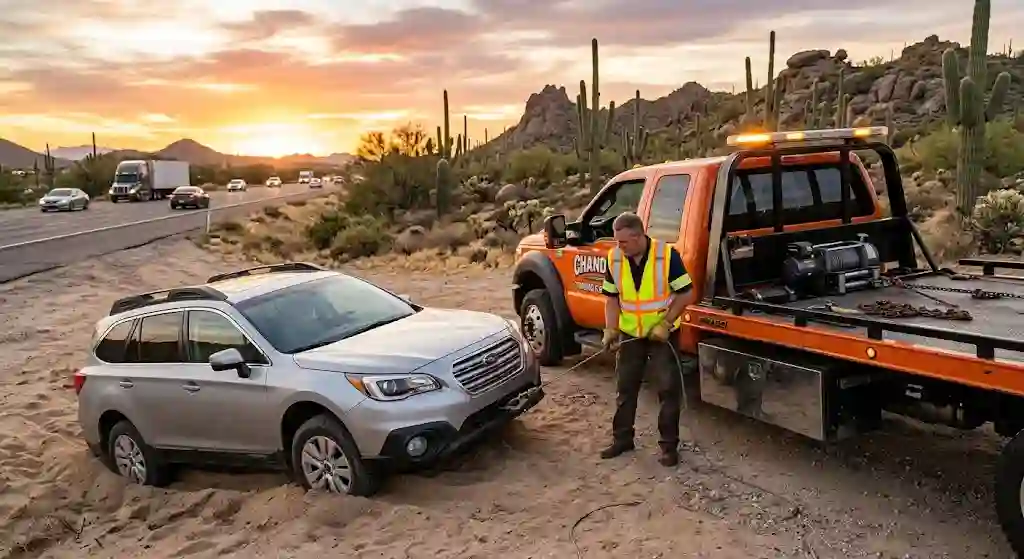
You’re stuck, the clock’s ticking, and you want a number before anyone pulls up. I get it. So here’s the quick answer: how much does vehicle recovery cost? Most common jobs, like a ditch pull or a winch-out, run about $125 to $500. Rollovers and heavy trucks can pass $1,000.
That range is wide, and I’ll explain why. I’ll break down each charge, show vehicle recovery prices by situation and vehicle type, and cover what insurance may pay. I’ll also share how to call a tow truck and what to ask first, so you stay in control of the bill.
What Is Vehicle Recovery and How Is It Different From Towing?
Vehicle recovery means freeing a vehicle that’s stuck, flipped, or off the road and getting it back onto safe ground. Towing moves a disabled vehicle from one place to another. A recovery often comes first, then a tow finishes the job.
Think of towing as a delivery and recovery as a rescue. A tow driver loads a vehicle that’s ready to roll and hauls it away. A recovery crew deals with the mess first: a car nose-down in a ditch, an SUV buried in desert sand, or a truck on its side.
That extra step is why the cost of vehicle recovery often runs higher than a basic tow. The crew needs more time, more rigging, and sometimes more people. Once your vehicle’s back on solid ground, the tow usually follows at standard rates.
What Factors Affect Vehicle Recovery Costs?
Vehicle recovery costs depend on the vehicle’s weight, how hard the spot is to reach, the equipment needed, labor time, tow distance, and time of day. A car in a shallow ditch costs far less than a loaded pickup stuck in a remote desert wash.
These factors move the price most:
- Weight and size: Heavier vehicles need stronger trucks and more crew.
- Location and access: A highway shoulder is easy. A wash, a trail, or a steep slope isn’t.
- Position and damage: Rollovers and crashed vehicles need careful handling to avoid more damage.
- Equipment: Winches, flatbeds, and cranes each add cost.
- Time on the job: Complex recoveries often bill by the hour.
- Distance and timing: Longer tows cost more, and nights, weekends, and holidays often carry a premium.
A small car in a shallow ditch on a busy road sits at the low end. A loaded pickup deep in a wash at midnight sits at the high end. Most jobs land somewhere between.
Vehicle Recovery Cost Breakdown
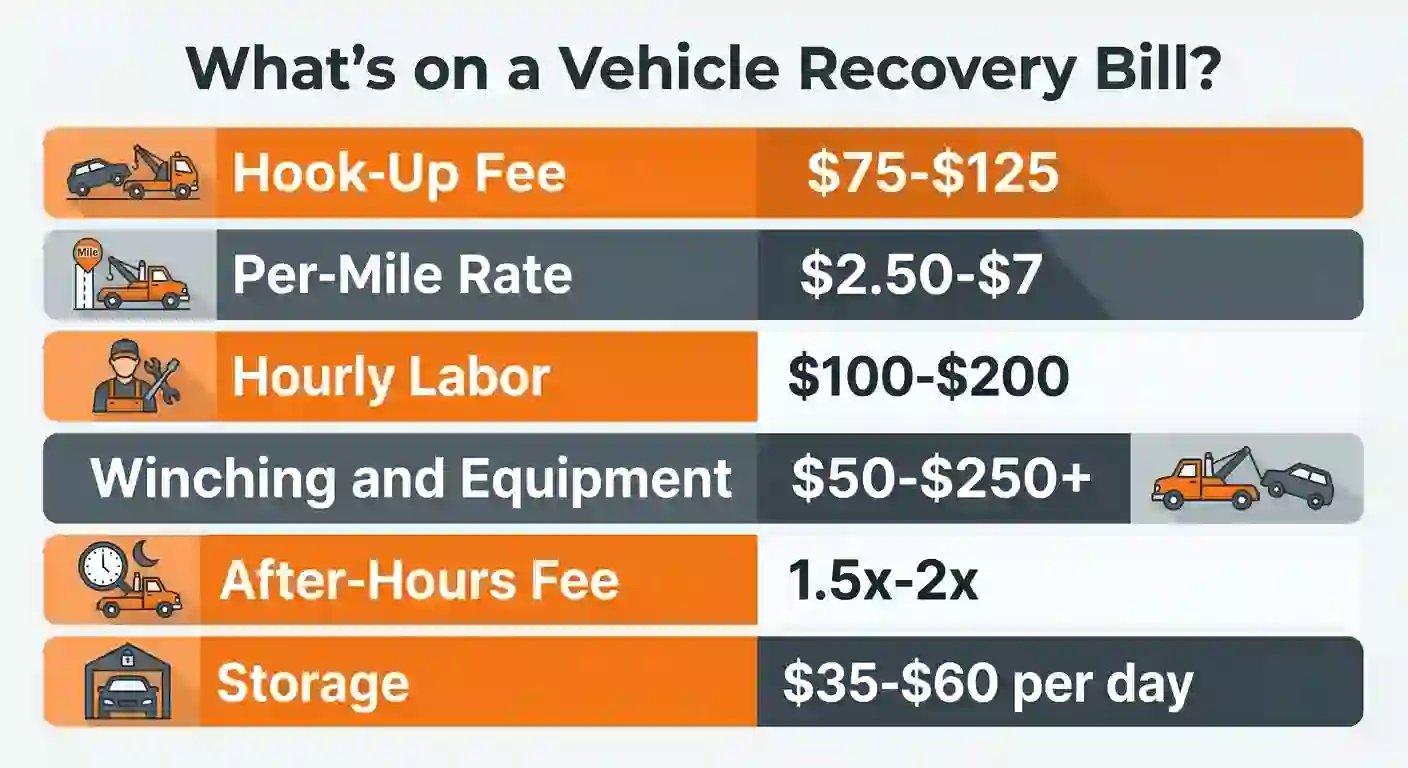
A standard vehicle recovery bill includes a base dispatch fee, hourly labor rates, equipment surcharges, and per-mile transport fees. Base fees cover dispatching the recovery truck, while labor and mileage account for actual extraction time and transport distance.
| Expense Component | Average Price Range | Description |
| Base Hook-Up / Dispatch Rate | $75 – $150 | Covers dispatching truck and basic hook-up. |
| Winch-Out / Labor Fee | $75 – $200 per hour | Applied for extractions from mud, snow, or ditches. |
| Per-Mile Towing Rate | $3.50 – $7.00 per mile | Charged after basic mileage distance limits. |
| After-Hours / Emergency Fee | $50 – $125 flat surcharge | Applied for nighttime, weekend, or holiday dispatch. |
| Daily Storage / Administrative Fees | $35 – $75 per day | Accrues if stored overnight at a secure lot. |
Vehicle Recovery Cost by Vehicle Type
Vehicle recovery rates vary based on vehicle size, ranging from $150 for sedans to over $1,500 for commercial semi-trucks. Light passenger vehicles require standard recovery gear, while heavy commercial vehicles need specialized rotators and heavy-duty tow trucks.
Light-Duty Recovery (Passenger Cars, Sedans, Small Crossovers)
Standard cars, sedans, and light SUVs generally fall into the light-duty category. Extracting a car from a shallow roadside snowbank or flat ditch typically costs $150 to $300. Standard flatbed tow trucks easily handle these vehicles once pulled onto pavement.
Medium-Duty & Off-Road Recovery (4x4s, Vans, Light Trucks)
Larger pickup trucks, passenger vans, and lifted 4×4 vehicles require medium-duty recovery equipment. Sinking a 4×4 deep into off-road mud or sand requires specialized kinetic recovery ropes or multi-point winch setups. These complex extractions generally range from $300 to $650.
Heavy-Duty Commercial Recovery (Semi-Trucks, Big Rigs, Buses)
Heavy-duty recovery involves commercial box trucks, semi-rigs, buses, and large RVs. These jobs require specialized heavy recovery rotators, crane equipment, and certified crews. Simple uprighting or complex rollover extractions start around $600 and often exceed $1,500 depending on overall complexity.
Vehicle Recovery Cost by Situation
Here’s what a typical vehicle recovery service cost looks like by situation. These ballpark figures include hook-up and labor, but not long tows.
| Situation | Typical range |
| Car or SUV in a ditch | $125 to $375 |
| Stuck in sand or mud | $125 to $400 |
| Off-road 4×4 trail recovery | $200 to $700 |
| Accident recovery (car) | $200 to $500 |
| Rollover | $500 to $1,000+ |
| Medium-duty truck | $300 to $600 |
| Large commercial rig | $1,000+ |
Off-road jobs run higher because crews often bill by the hour and need extra rigging. Rollovers need slow, careful lifting, which adds time.
Does Insurance or Roadside Assistance Cover Vehicle Recovery?
Sometimes. Roadside assistance plans often cover towing and basic help, but many cap the distance or exclude winching. Auto insurance may pay for recovery after a covered accident through collision or comprehensive coverage. Check your policy for limits, exclusions, and whether you pay first and get reimbursed.
Roadside plans from AAA, credit cards, and car makers often include towing within a set distance. Many treat winching differently. Some cover it only on public roads, not on trails or private land.
Auto insurance works another way. If a covered accident caused the problem, your policy may cover the recovery. Some policies also add optional towing coverage. Call your insurer before you agree to a big bill, and ask whether they pay the company directly.
How to Avoid Overpaying for Roadside Recovery
Avoid overpaying for recovery services by requesting a clear line-item estimate, confirming per-mile rates, and checking insurance coverage before agreeing to dispatch. Clear communication prevents unexpected fees after the job is finished.
- Ask for Line-Item Rates Upfront: Request the exact base dispatch fee, hourly winch labor rates, and per-mile charges before the recovery truck departs.
- Clarify Vehicle Condition and Location: Provide exact location coordinates and describe vehicle orientation clearly so dispatch sends the correct equipment on the first trip.
- Check Roadside Coverage: Verify if your auto insurance, credit card benefits, or auto club membership covers initial winch fees.
- Watch for Hidden Storage Costs: Confirm where your vehicle will be transported to avoid unexpected daily impound or storage lot charges.
- Keep Detailed Records: Keep all physical receipts and invoices for easy submission to your insurance provider.
Understanding how recovery services are priced gives you confidence when navigating unexpected roadside situations. Knowing what equipment is needed and how rates are structured ensures you receive safe, fair, and transparent service.
When looking for trustworthy towing services, working with local experts makes all the difference. For dependable assistance, reach out to Ceejays Towing LLC for professional Towing Services Phoenix, AZ. Contact us today to learn more about how we can help.
Frequently Asked Questions
How much does a basic winch-out cost?
A basic winch-out costs between $75 and $200 for standard passenger cars stuck near a paved road. The overall cost depends on distance from the pavement, ground conditions, and the time required to securely attach winching equipment.
Will standard towing cover a car stuck in deep mud?
Standard towing does not cover cars stuck in deep mud because it requires specialized winching gear. Standard towing only moves rolling vehicles on solid roads, while mud extractions need heavy-duty recovery equipment.
Why is heavy-duty recovery so expensive?
Heavy-duty recovery is expensive because it uses specialized equipment like rotators and cranes alongside certified crews. These complex operations require precise rigging calculations to safely move heavy commercial vehicles without causing further damage.
Are recovery costs higher at night?
Yes, recovery costs are often higher at night due to standard after-hours emergency dispatch surcharges. Towing operators add these premiums to cover nighttime safety measures and off-hours staffing.